Category: DEI

  • Improving Imaging of Gender-Diverse Patients

    Improving Imaging of Gender-Diverse Patients

    ARRS is collaborating with the Radiology Health Equity Coalition (RHEC) to curate and disseminate trusted resources and best practices for improving access and utilization of preventive and diagnostic imaging.

    Gender-affirming care is a rapidly evolving, highly politicized component of health care, affecting patients of all ages. Over the last decade, transgender and gender-diverse patients have been better recognized as a gender minority, approximated to represent up to 2% of the general population.

    A frequently stigmatized group, the health care needs of these populations are often ignored or even condemned, leading to high rates of adverse health outcomes. Therefore, it is critical for physicians and hospital systems alike to be educated in the medical and the psychosocial aspects of gender-affirming care, so to ensure competent and compassionate care that optimizes patient health, autonomy, and wellbeing.

    Presented live as a Featured Sunday Session during the 123rd ARRS Annual Meeting, “Improving Care of Gender-Diverse Patients in Radiology Departments” featured expert lectures on basic gender literacy, as well as pertinent clinical, surgical, and imaging aspects of gender-affirming care.

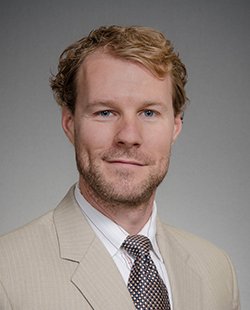
    Participants were presented with—and provided continuing access to—a gender diversity toolkit, care of the two course directors for “Improving Care of Gender-Diverse Patients in Radiology Departments” at the ARRS Annual Meeting:

    Sarah Menashe, MD

    Assistant Professor, Pediatric Radiology

    University of Washington School of Medicine

    Seattle Children’s Hospital  

    Jason Wright, MD

    University of Washington School of Medicine

    Seattle Children’s Hospital    

    Additionally, all viewers of this #FOAMrad resource from ARRS will enjoy a step-by-step guide and repository of resources enabling individuals and departments to improve their provision of gender-affirming care in both the adult and pediatric settings.

    Gender-diverse patients deserve uniform access to culturally competent, affirmative care in an environment that is free from harassment, discrimination, and bias. Apropos, this Featured Sunday Session during the 2023 ARRS Annual Meeting sought to educate medical imagers who want to improve their understanding and delivery of gender-affirming care.

    • What Do You Say? Literacy in Sex- and Gender-Affirming Care”—Vaz Zavaletta, MD, PhD
    • Overview of Sex- and Gender-Affirming Surgery—Frances Grimstad, MD, MS
    • Perioperative Imaging of Sex- and Gender-Diverse Patients—Michelle LaRosa, MD
    • Tools for Success: Practical Toolkit for Providing Gender-Affirming Care—Sarah Menashe, MD, and Jason Wright, MD

  • Saturday Scans Strengthen Lung Cancer Screening

    Saturday Scans Strengthen Lung Cancer Screening

    ARRS and 11 other medical imaging organizations are collaborating on the Radiology Health Equity Coalition (RHEC) to curate and disseminate trusted resources and best practices for improving access and utilization of preventative and diagnostic imaging.  

    A decade has passed since the United States Preventive Services Task Force’s first recommendation of low-dose CT (LDCT) for lung cancer screening (LCS). And yet, national LCS rates still remain worrying low: fewer than 1 in 10 Americans eligible for LDCT actually undergo annual screening. Compared with more established screening examinations for other cancers—about 67% for mammographic screening, 69% for colorectal screening, and 74% for cervical screening—LCS’ less than 10% looks even lower.

    The President’s Cancer Panel points to LCS as the single most effective strategy for reducing mortality from the disease, as well as for helping to close the healthy equity gap with improved access to care. Of course, for rural and racial/ethnic minority cohorts, access to and utilization of LCS has proven particularly tough. Not only are rural and minority populations more likely to live more than half an hour away from a designated screening center, all too often, these patients are also underinsured and suffer from lower levels of health literacy.

    That said, low usage rates for LCS do present a unique opportunity for radiologists and allied medical professionals at every step of the imaging encounter to work together with patient and caregiver advocates, community health organizations, cancer centers, and insurers to enhance accessibility for lifesaving and effective LDCT.  

    Screening on Saturday?  

    Although advances in modalities and innovations of technique have leveled the field, perhaps the most persistent barrier to screening is scheduling. What is the patient’s availability? When is the appointment?

    Worldwide, lung cancer continues to claim the highest mortality rate, with socioeconomically disadvantaged populations having the highest incidence rates. Despite having nearly identical medical leave needs, workers taking home less than $15 an hour have the least access to paid leave and eligibility for Family Medical Leave Act protections. More commonly, low-wage workers face adverse working conditions and financial consequences from taking whatever leave they do have. Nevertheless, most proper screening centers operate on a typical Monday through Friday schedule. Said operating hours afford little opportunity for patients with the greatest need to schedule and attend necessary screening appointments.

    https://www.radfyi.org/2021/05/28/practical-guide-to-health-equity-in-clinical-practice/

    On Saturday, November 11, 2023, ARRS and partner societies of the Radiology Health Equity Coalition (RHEC) will collaborate with the American Cancer Society’s National Lung Cancer Roundtable for the second annual National Lung Cancer Screening Day. A key date during Lung Cancer Awareness Month, National LCS Day encourages facilities to keep open their doors on the second Saturday in November, specifically for LDCT lung screening. In addition to raising awareness for early detection of lung cancer at large, Saturday screening allows those individuals who have already been referred for LDCT to get scanned—without having to take a day off of work, themselves.

    Curious if your practice or department is able to support this year’s National LCS Day on the 11th of November? There are some questions you will need to answer, first and foremost:  

    • Talk to your supervisor or chairperson. Discuss among colleagues. You’ll need approval and allocation for the additional screening, including a CT technologist for each LCS unit.
      • Perhaps there’s only a timeframe you’re able to offer LCS: morning only, afternoon only, late morning/early afternoon?
    • Inform scheduling staff your facility will be opening on November 11, so they can offer patients that Saturday option
      • Confirm with IT that scheduling system is open for booking appointments
    • Marketing & Communications
      • Ask your marketing department to promote the event: press release, social media, etc.

    Should your practice or department find all the necessary resources to scan on Saturday, here are some day-of tips to consider that will help you have a successful screening:  

    • Again, ensure your National LCS Day event is staffed accordingly
      • CT Tech—double-check!
      • Registration
      • Maintenance and housekeeping
      • Security
    • Refreshments (if allowed)
      • Coffee and donuts for Saturday morning
      • Snacks and drinks for Saturday afternoon
    • Marketing & Communications
      • Invite PR representative to take pictures and interview patients on Saturday

    National LCS Day is intended to serve as a catalyst for year-round screening awareness efforts, of course. Rather than waiting until the second Saturday in November to work screening into their routine, patients and clinicians alike are encouraged to make accessible LCS a year-round priority.

    Finally, acknowledging that National LCS Day falls on the Veterans Day holiday, RHEC is pleased to be working alongside the U.S. Department of Veterans Affairs to increase outreach and awareness to our military population, in turn saving more lives.

    https://www.radfyi.org/2022/05/25/practical-diversity-equity-and-inclusion/
  • How to Add Oil

    How to Add Oil

    In Mandarin Chinese, a phrase that is often said to encourage and support loved ones is 加油 (pronounced jiāyóu). In English, it directly translates to “add oil” or “add fuel.”

    My parents immigrated to the United States from Taiwan in the 1970s and 1980s. My siblings and I were born in Monterey Park, CA, a well-known suburban haven for East Asia Americans. My parents, however, quickly moved us to a predominantly White neighborhood in Orange County, hoping that we would assimilate for a better life. 

    After studying bioengineering in college, I pursued my PhD working on agricultural diagnostics. Early in graduate school, my dad was diagnosed with prior hepatitis B infection and liver cirrhosis. This is when I learned that Asian American men are 60% more likely to die of hepatobiliary cancer, compared to non-Hispanic White men. At the time, I felt ashamed that as a college graduate pursuing an advanced degree, I had been completely ignorant of this health disparity that was pervasive in my own Asian American community. Why did we learn so much about HIV and hepatitis C in school, and so little about hepatitis B? After extended discussions with career mentors and family, I ultimately decided to career-change into medicine; I would apply for and plan to attend medical school after completing my PhD. 

    As a non-traditional applicant, I was fortunate to be accepted into the Medical Innovators Development Program at Vanderbilt University School of Medicine—my dream program, where I could simultaneously learn medicine and keep alive my interest in engineering. As a West Coast native, however, I was not prepared for the culture shock that was waiting for me in the South. Upon transplantation, I was quickly surrounded by microaggressions, which were both confusing and yet oddly familiar. “But where are you really from?” was a common question for me, after offering that I am from Southern California, the place where I was born and spent my childhood.

    Comments about my surprisingly proficient English and catcalls on the street, using deranged pronunciations of East Asian languages from Japanese to Korean, made it clear that strictly based on my appearance, I was not perceived as “American” to my local community. This experience triggered repressed memories of bullying from grade school, when my peers would compare the shape of my eyes to floss and ask me to translate “ching chong ching chong” for them. To which I would respond, confused, that those were not Chinese words, and the words meant nothing. 

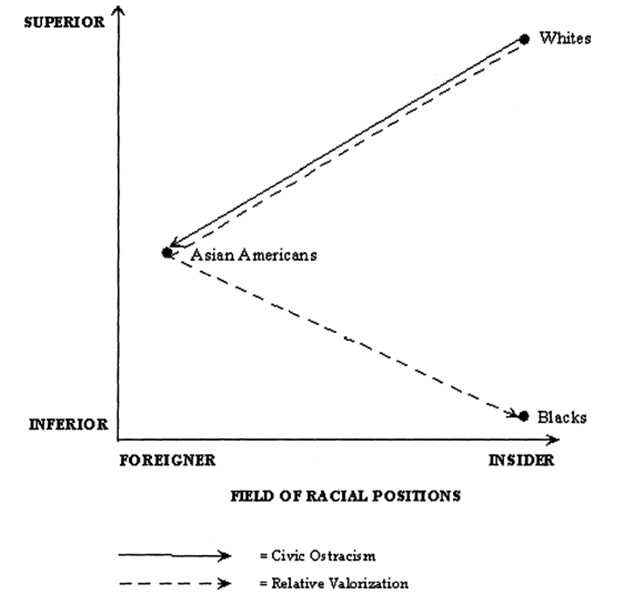
    During medical school, this sparked a new reflection and interest in my experience as an Asian American growing up and living in America. Through the Asian Pacific American Medical Student Association, I participated in an anti-racism workshop in which I learned about the racial triangulation theory (Fig. 1), published by Claire Jean Kim in 1999.

    Fig. 1—’Racial Triangulation’ adapted from Kim, Politics & Society, 1999.

    Kim explains the context of anti-Asian racism, which is based on anti-Blackness. Asian stereotypes such as “oriental” (read: exotic, foreign, anti-Western) and “model minority” (read: quiet, submissive, good-at-math), have been used to drive a wedge between the Asian and Black populations; driving home the message that if Asians would follow the anti-Black social racial hierarchy, they would be passively tolerated—albeit never accepted—in American society. Racial triangulation has since been further extrapolated to additionally include the Hispanic/Latinx experience. From this foundation, I understood that the best way to combat racism is for all populations of color to stand together, with respect and support for one another. 

    Today, I reside again in California. As a diagnostic/interventional radiology trainee, I have started a medical research initiative called Research with Inclusion, Social justice, and Equity or RISE. Our mission is to increase the representation of populations of color in medical research cohorts by supporting data transparency and empowering clinicians and clinical researchers to report the racial/ethnic breakdown of their study cohorts in their demographics table. A question I am often asked is, “how do you find the motivation and energy for it all?” Amid the rampant burnout that plagues our training culture, how do I “add oil” to keep going? My answer is that I reflect on my story, and I remind myself that my story is not unique. I get out of bed in the morning to work toward a hope that one day my story will become a fragment of a past culture in American medicine. And while it’s not a perfect method of fighting burnout, it’s certainly gotten me this far.

    What is your story? How do you add oil?

    <strong>Jessica T. Wen</strong>, MD, PhD
    Jessica T. Wen, MD, PhD

    PGY-3 IR/DR Resident
    Stanford University

    You may also be interested in
  • Thriving in a Multigenerational Workforce

    Thriving in a Multigenerational Workforce

    Unlike any prior time period in our history, the contemporary workplace will soon encompass five different generations, distinguished variously, but typically defined and labeled by year of birth. Here, I’m referring to Baby Boomers (1946–1964), Generation X (1965–1980), Generation Y or Millennials (1981–1995), Generation Z (1996–2010), and the forthcoming Generation Alpha (2011–2025). Largely driven by the advertising world, hoping to better target their marketing campaigns, efforts have been made to easily distinguish these groups based on social influences, generational values, behaviors, and preferences.  

    I suspect that these labels may have complicated matters even further. For example, the COVID-19 pandemic-induced shift to the virtual workplace may well have exacerbated intergenerational tensions in areas where groups are supposed to differ. Think social interactions, communication preferences, work-life integration and wellness strategies, perceptions of technology usage, and willingness to change. These differences must surely have led to breakdowns in communications, team function, and clinical performance, among many others.

    On one hand, these age-based delineations can be a helpful reference point, particularly when leading multigenerational teams. There are some proposed defining factors, such as cultural movements, historical milestones, technological advancements, learning preferences, and lifestyle traits for each period that can be interesting to delve into and see whether they resonate with yourself and your teams. These features can be lively conversation starters and help you glean insight into how best to manage morale and burnout, as well as create more inquiry, respect, and open-mindedness among such a diverse population. However, surely additional factors beyond age should be equally impactful; consider background experience and training, levels of maturity, tenure within an organization, and lineage in a role.

    Is it possible that the COVID pandemic has influenced societal perceptions of generations, and might the pandemic influence the formation of generational identities for those still in formative years?

    It seems to me that this is a very opportune time to work to address and dispel age-associated or generational stereotypes.

    Dispel the Myths

    That said, it’s so important that we inquire, appropriately and respectfully, about the stories of others to expand upon—and maybe even rebut—marketing matrices.

    Upon reflection, I don’t think that people neatly fit into their age-based silo. As I look across the multigenerational tables as a Baby Boomer by age, I certainly have “silo creep” and span several different buckets. You might think World War II, for example, was a defining life event for me, but that wouldn’t be true. Rather, I grew up as a relatively privileged individual during the segregated South African apartheid era, which left an indelible impact on my values, philosophies, and priorities.

    I know I’m not alone here. When speaking with a millennial colleague, it became clear that these categories are not cut and dried:

    “I think some of these characteristics are pretty broad generalizations. I am part of the millennial category, but it has never quite resonated with me. Millennials are often painted in an unfavorable light, such as when it comes to work ethic, world views, and materialism, just as Baby Boomers can be criticized for not being tech-savvy, and seniors can be stereotyped as dependent and frail.”

    “My father, a Baby Boomer, studied computer science as an undergraduate, before it became an official degree program at Boston University. My grandfather, a member of the Silent Generation, ran his final Boston Marathon in 4 hours and 30 minutes at age 72 and continued to participate in road races into his 80s. To me, labels can be tough because they don’t allow for nuance and individuality; they don’t tell the whole story.”

    It’s easy to jump on the bandwagon and affirm negative generalizations, but this can be damaging when it comes to building an inclusive team. We must ensure these categories, simply based on a number, don’t serve as a detrimental springboard for misunderstandings about behaviors and preferences.

    Seek Data and Understanding

    It’s our responsibility as leaders to build diverse teams and foster respectful environments for every member of our workplace and beyond. We can strive to enact change at the national level, such as by communicating the importance of accommodating different learning styles for different generations at major conferences and advocating for educational material that best suits the learner (e.g., didactic talks vs. handouts vs. podcasts, etc.).

    Locally, we can commit to better understanding our colleagues on a one-on-one basis. If one generation prefers frequent, regular, unvarnished feedback, provide that. If possible, be willing to adapt traditional annual reviews to meet worker preferences. Support departmental social media initiatives but be respectful of those who might not wish to expand their digital presence at this time. You’ll find that some cohorts might thrive on multitasking, while others prefer to focus on tasks linearly. Take all of these factors into consideration. 

    Ask, listen, collect data, and repeat. Run a short quarterly communication survey asking how employees prefer to receive information within the department, or whether digital Grand Rounds lectures are meeting their academic needs. Sometimes, simply listening and giving people a choice can make all the difference when it comes to feeling a true sense of appreciation and belonging at work.

    Not fully understanding the complexities of our multigenerational workforce has been described as a contributor to workplace stress and burnout. Challenges managing, building, and leading multigenerational teams have been recognized, yet solutions have not. We must first hear from our colleagues directly. For example, you might ask a more seasoned colleague what it was like when they first started out in radiology. How have things changed over time? In their perspective, has it generally been for the better, or have there been obstacles along the way? How has patient care evolved? Older generations might consider asking younger generations about what their highly digital academic training experiences are like today. When an opportunity presents itself, respectfully inquire and listen to build connections and understanding.

    Celebrate Our Diversity of Ages 

    One good aspect of the multigenerational descriptors is that they remind us of the remarkable diversity of values, preferences, and skills that we are so fortunate to have in our workforce. Understanding, embracing, welcoming, including, and being respectfully inquisitive about these differences will serve us far better. Acknowledging that differences exist and committing to learning about them is a lifelong journey.

    Starting today, instead of trying to transform one generation to adjust to another, let’s:

    • celebrate the diversity of ages in our workforce
    • embrace all skills, expertise, and experiences
    • focus on intentional inclusion activities
    • shift the focus away from this single cultural descriptor (age) and build teams that are as diverse as possible
    • avoid alienating labels and siloes and stereotypes

    Never before have four different generations worked together in Beth Israel Deaconess Medical Center radiology, bringing different values, preferences, communication styles, strategies for work-life integration, and wellness approaches into the milieu. The list of differences is extensive and complex. What a terrific and timely opportunity to embrace! A field such as imaging is so dependent on the structure and function of high-performing teams. Therefore, it behooves us to better understand the different generations and explore how best to take advantage of these opportunities.


  • Dismantling Systemic Injustices Through Intentional DEI Strategies and Inclusive Team-Building

    Dismantling Systemic Injustices Through Intentional DEI Strategies and Inclusive Team-Building

    This post was originally featured in ARRS InPractice.

    Those of you I have connected with virtually over the past year may recall that, in addition to family photos, my office (and thus my zoom background) is adorned with my old cricket bat, indigenous South African art, Khoisan necklaces, hummingbird photographs, and Shona stone sculptures. These are just a few artefacts that represent my cultural identity, on which I’ve been reflecting a lot these days.

    One of the reasons I emigrated from South Africa after completing my medical and basic science training was to escape the abhorrent system of apartheid that I witnessed up close from a young age. My wife and I touched down in the U.S. in 1987 filled with hope and much anticipation. The days of watching fellow human beings suffer at the hands of systemic racism, marginalization, violence, and oppression were behind us, or so we thought. Perhaps our departure was one way of social distancing from that awful pandemic, though much guilt persists knowing that “running away” would not contribute to a solution in any lasting or meaningful way.

    Demolishing Normalcy

    Fast forward to the year 2020, and we find ourselves grappling with the factors that contributed to George Floyd’s death. Along with the outbreak of COVID-19, more than 15 long months ago, and the ubiquitous opioid addiction crisis, the America that we chose to move to is experiencing more than a single pervasive pandemic and finds itself in desperate and urgent need of a reckoning with structural racism.

    The last year has exposed centuries-long inequities, disparities, and ignorance, which impact our employees, peers, patients, loved ones, and communities in ways big and small, seen and unseen, told and untold. Absent diversity, equity, and inclusion (DEI) strategies, combined with social distancing protocols, full-time remote work, technology and commitment overload, and skyrocketing mental health concerns have rightfully demolished what we once believed were the tenets of effective teams; the trademarks of normalcy. To return to what we as radiologists do best—providing top-quality, safe, timely, and evidence-based care—we must work together to dismantle, then to rebuild the status quo. How can we do this?

    We Must Row as One

    Whether based in a hospital, private practice, or academia, we need to develop and implement DEI strategies that will build high-performing teams through intentional inclusion practices. It’s the only way we can ensure the highest-quality care for our patients, eliminate care and outcome injustices, and begin to narrow the health disparity gaps. We must acknowledge that, yes, we all have biases, many of which are unconscious.

    Consider the myriad of players and moving parts in our ecosystems: our technologists acquiring and managing images; our IT colleagues facilitating image interpretation, data management, and report communication; and our nurses providing compassionate, patient-centered care during minimally invasive procedures. We also have the essential contributions of our translators, transporters, schedulers, nurse navigators, medical assistants, advanced practice providers, administrators, and image repository staff. To effectively serve our patients, we must understand, respect, trust, and listen to one another. Simply put, we must row as one.

    Doing the Work

    As a first step, I encourage you to take Harvard University’s Implicit Aptitude Test to better understand some of your own biases. Set aside uninterrupted time, and take the test with an open and honest mind. You can also ask your employees or colleagues to do the same. Take time to discuss what everyone learned, and listen to each participant. Sit with them, either in person or virtually, and truly hear their experiences and perspectives. Make sure to create an environment of safety, compassion, and open-mindedness for each gathering. You can also consider designing a DEI survey for your team to receive anonymous or attributed feedback. In the spring of 2019, Harvard University created a three-minute “pulse survey” for its community. The executive summary, final report, and data charts and tables are available here.    

    In these discussions and surveys, you can also delve deeper into topics such as cultural humilitymicroaggressions, and the difference between bystanders and “upstanders.” The emerging practice of cultural humility, a commitment to lifelong learning about global cultural differences, encourages us to inquire and learn about the experiences and identities of others. Ignorance can lead to an intended or unintended microaggression, which Medical News Today defines as “a comment or action that negatively targets a marginalized group of people.” Another important term to learn and practice is upstanders, or people who speak or act in support of an individual or cause, particularly on behalf of a person being attacked or bullied.

    The Concept of Ubuntu

    The Zulu and Xhosa concept of Ubuntu emphasizes the importance of “being oneself through others,” a form of humanism best expressed by the phrase, “I am because of who we all are.” Imagine if we realized that our best personal function was dependent on the function of our entire team?

    To sustain and elevate team functionality, we must adopt this philosophy in a way that resonates with you. Perhaps it’s by remembering the Golden Rule, which instructs us to treat others the way we would like to be treated ourselves. Maybe it’s by thinking about Aristotle’s historic quote: “The whole is greater than the sum of its parts.”

    At the core of our impact as imagers is a broad swath of races, cultures, ideologies, genders, religions, age groups, and much more. Over the next year, we will continue to share DEI resources and invite members of our ARRS family to volunteer, as we develop educational materials that are the building blocks for individual members and practices to rebuild their teams. To submit ideas and feedback, please email me directly at jkruskal@bidmc.harvard.edu.

    About the Author
    Jonathan Kruskal

    Melvin E. Clouse Professor of Radiology, Harvard Medical School
    Chair, Department of Radiology, Beth Israel Deaconess Medical Center

  • Practical Diversity, Equity, and Inclusion

    Practical Diversity, Equity, and Inclusion

    Presented at the 2022 ARRS Annual Meeting, this course covers key diversity, equity, and inclusion topics and their importance in serving the needs of the workforce, profession, and patients.

    This post was originally featured in ARRS InPractice.

    Proper communication in a health care setting is vital to delivering quality care to patients. Without it, the quality of health care would be compromised, leading to greater overhead costs and, ultimately, negative patient outcomes. It is well-established that good communication requires basic health care literacy, intercultural competence, and language translation, when needed. But what about communication between providers? Towards nurses? Medical technicians? Medical students? It is easy to forget that patient care is a team effort, which entails cooperativity. While direct aggressive behavior is seldomly seen nowadays, subtle negative attitudes are often projected into biased mannerisms and come across as indignant, derogatory comments. Both these behaviors are unprofessional, but the latter is witnessed much more—to which it seems many prefer to turn a blind eye. Eventually, it becomes the status quo. Such comments sting for a moment but can be ignored; however, repetitive comments are damaging and lead to self-confidence issues and mental health conditions, such as anxiety and depression. These are microaggressions. It is imperative that microaggressions are addressed promptly and professionally to avoid escalating tension in the health care team.

    A microaggression is a comment or action that subtly and often unconsciously or unintentionally expresses a prejudiced attitude toward a member of a marginalized group. These types of comments are usually due to underlying implicit bias. Microaggressions are not just harmless side comments; they have significant psychological and physical consequences to the recipient. Microaggressions can be both verbal or nonverbal. Examples of verbal microaggressions include one attending saying to another attending, who is Asian in appearance (but is actually Korean): “We have a Chinese patient and need an interpreter. You speak Chinese, right?” Or a male saying to a female radiologist: “You are too pretty to be a radiologist and sit in the dark. You should be in pediatrics.” Nonverbal microaggressions could be a store owner following a black customer around the store, or a manager ignoring an idea when a female employee presents it, then praising a male employee for saying the same thing. When such examples are experienced as isolated events, they can cause the recipient to become angry or frustrated. When someone is the recipient of microaggressions repeatedly, these events become dehumanizing and can lead to anxiety, lack of self-worth, depression, as well as physical distress.

    Difficult conversations at work have additional complexities because of factors such as rank, seniority, perceptions of power within the organization, and perceived threats to work identity, which is often more deliberately crafted than the identity of our private lives. Difficult conversations can be unsuccessful because we bring assumptions and narratives about the intentions of others to the table, without being mindful of the fact that these assumptions are fabricated from our experiences in the world.

    Mindfulness is the practice of bringing your attention to the present moment without judgment. Mindfulness is a skill that, when learned, will hopefully lead to equanimity and the ability to respond, rather than react1. Mindfulness is a key element in using the Most Respectful Interpretation (MRI) method of responding to others. Instead of automatic negative assumptions about someone else’s actions or intentions, you are deliberately mindful, assuming the most generous intentions for that person. Bringing mindfulness to a difficult conversation allows you to arrive with compassion and empathy, but without judgment. Doing this will make the other person less defensive and more open to deeper and richer conversation. The threats to identity and ego are diminished, and you allow space for someone else’s perspective to be true.

    A difficult conversation involves anything that is uncomfortable to talk about. Examples include confronting a supervisor making suggestive comments, a colleague unaware of their microaggressions, or coworkers with a conflict. Three questions to ask when contemplating a difficult conversation are:

    1. What do I really want?
    2. What do I want for others?
    3. What do I want for the relationship?2

    There is a tendency to avoid difficult conversations because they can make us feel uncomfortable, vulnerable, and anxious about challenging responses. However, unaddressed issues often simmer and can eventually erupt into an emotionally charged confrontation focused on blame and assumed intentions. Approaches to handling a difficult conversation well include shifting to a learning/curiosity stance, disentangling impact from intention, and moving from a blame frame to understanding contributions to the problem from both sides. Effective conversation skills include inquiry, active listening, paraphrasing, acknowledgement, reframing, and contrasting3. The goal is to move from a difficult conversation to a learning conversation with mutual understanding and purpose.

    Microaggressions can often be addressed with curiosity. For example, one could say, “I’m sorry, could you repeat what you just said? I’m not sure I understood what you said.”

    The timing of one’s intervention should be considered. We should consider “calling in” in private rather than “calling out” in public.

    New or renewed attention on how workplace and institutional culture and behaviors impact marginalized communities can be challenging. Most people do not receive training throughout their careers on these topics, and the cultural or societal implications they may bring up can be challenging. As education is a central pillar to the ARRS, it was determined necessary to establish a Diversity, Equity, and Inclusion (DEI) committee to help provide teaching and resources to members and the public on relevant topics.


    About the authors
    Patrick Young

    Student Admissions Ambassador, Midwestern University Arizona College of Osteopathic Medicine
    President, Asian Pacific American Medical Student Association

    Carolynn DeBenedectis

    Associate Professor (Breast Imaging), Vice Chair for Education, Radiology Residency Program Director University of Massachusetts Medical School/UMass Memorial Medical Center

    Ann Jay

    Associate Professor (Clinical Radiology and Otolaryngology), Director of Head and Neck Imaging,
    Vice Chair of Education, Radiology Residency Program Director MedStar Georgetown University Hospital

    Lori Deitte

    Professor of Radiology and Radiological Services, Radiology
    Vice Chair of Education Vanderbilt University Medical Center

    Daniel Chonde

    Resident Physician, Radiology
    Harvard Medical School/Massachusetts General Hospital
    Chair, ARRS Diversity, Equity, and Inclusion Committee

    Nolan Kagetsu

    Associate Clinical Professor (Neuroradiology)
    Icahn School of Medicine at Mount Sinai/Mount Sinai West Hospital
    Advisor, ACGME Office of Diversity and Inclusion

  • Resources for Promoting Diversity, Equity, and Inclusion in your Radiology Team

    Resources for Promoting Diversity, Equity, and Inclusion in your Radiology Team

    Cultural sensitivity and awareness

    Cultural sensitivity, also sometimes referred to as cross-cultural sensitivity or simply cultural awareness, is the knowledge, awareness, and acceptance of other cultures and others’ cultural identities.

    Cultural humility training

    Team members are culturally aware and demonstrate cultural humility. Instead of being knowledgeable or “culturally competent” of the many different cultures and backgrounds of colleagues and patients, cultural humility allows us to enquire and learn more about experiences and cultural identities of others. This increases the quality of interactions with each other and our patients. By practicing self-humility one can focus on self-reflection and lifelong learning and improvement.

    Allyship

    Important and necessary actions that can foster a professional environment include practices of allyship learned through bystander and upstander training. Allyship is the practice of emphasizing social justice, inclusion, and human rights by members of an ingroup, to advance the interests of an oppressed or marginalized outgroup. Allyship is part of the anti-oppression or anti-racist conversation, which puts into use social justice theories and ideals.

    Bystander effectiveness

    An upstander is a person who speaks or acts in support of an individual or cause, particularly someone who intervenes on behalf of a person being attacked or bullied. An upstander is a person who speaks or acts in support of an individual or cause, particularly someone who intervenes on behalf of a person being attacked or bullied.

    Managing microaggressions

    Microaggressions are common, everyday slights and comments that relate to various intersections of one’s identity such as gender, sex, race, ethnicity, and age, among other aspects.

  • Micro and Macroaggressions: How to Be an Ally

    Micro and Macroaggressions: How to Be an Ally

    This session focuses on strategies for recognizing and dealing with difficult conversations and microaggressions. The first hour will cover: Introduction to Microaggressions, The Use of Mindfulness in Difficult Conversations, Engaging in Difficult Conversations , and What to Say in the Moment. The second hour will be interactive and include a variety of scenarios and potential responses.

    Sessions Included
    • Carolyn DeBenedectis, Introduction to Microaggressions
    • Ann Jay, The Use of Mindfulness in Difficult Conversations
    • Lori Deitte, Engaging in Difficult Conversations
    • Noal Kagetsu, What to Say in the Moment
  • Practical Guide to Health Equity in Clinical Practice

    Practical Guide to Health Equity in Clinical Practice

    This course offers a collection of health equity considerations for radiology businesses from academia and private practice. Course faculty address practical facilitators and barriers to achieving health equity in radiology and provide how-to tips for integrating the concept of health equity in everyday radiology practice.

    Sessions Included
    • Nabile Safdar, MD (2009 Berlin Scholar): Introduction to Health Equity for Practicing Radiologists
    • Ruth Carlos, MD, MS, FACR: The Business Case for Diversity and Health Equity
    • Samilia Obeng-Gyasi, MD, MPH: Care Equity in Clinical Practice
    • Gelareh Sadigh, MD: Financial Toxicity and Health Equity
    • Efren Flores, MD: Health Equity in Screening
    • Andrew Moriarity, MD: Facilitators and Barriers to Health Equity Initiatives in Private Practice
    • Amy Patel, MD: Community Engagement to Advance Health Equity in Private Practice