
Category: Spring 2020

  • Andrew Rosenkrantz Named 13th Editor in Chief of AJR

    Andrew Rosenkrantz Named 13th Editor in Chief of AJR

    Published May 10, 2020

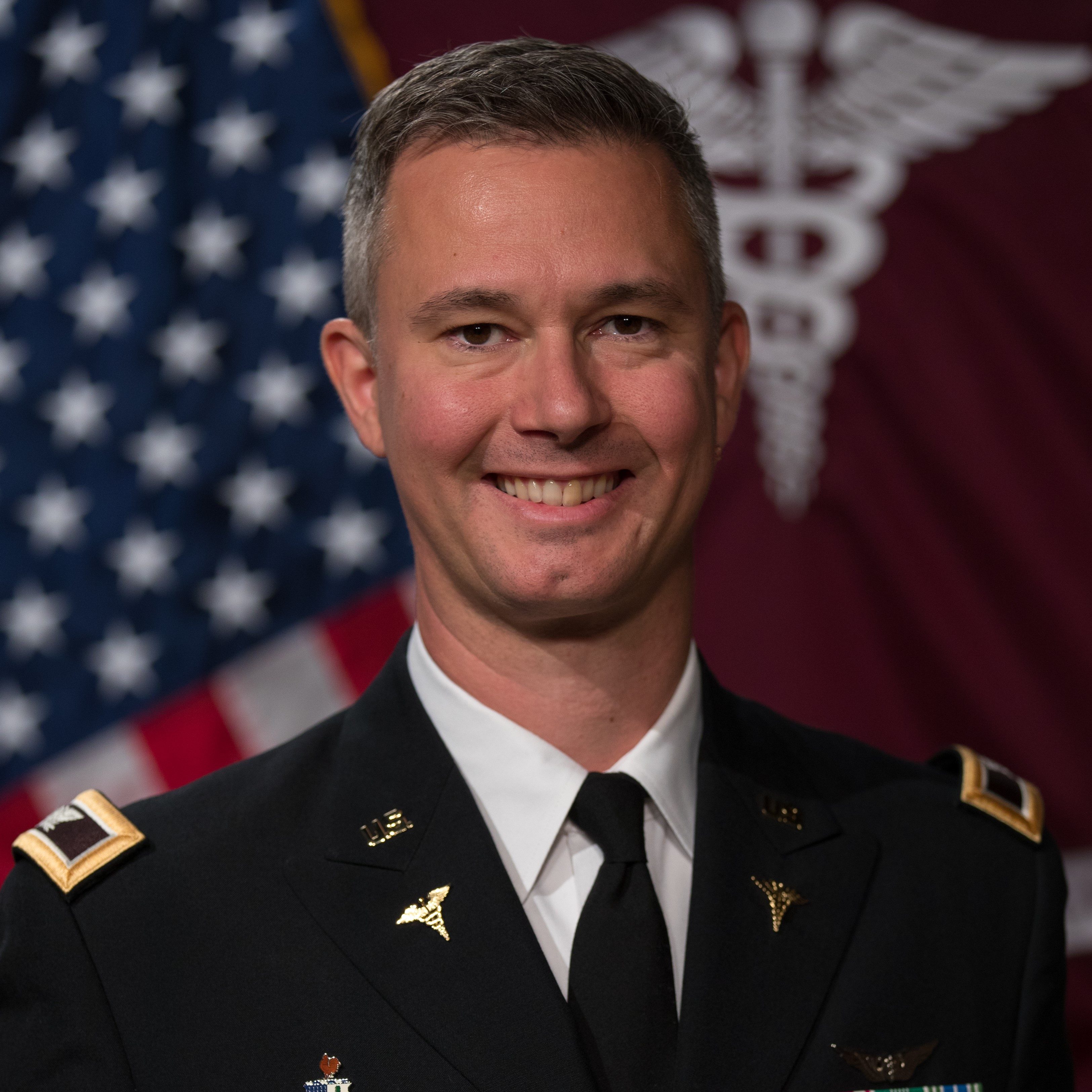
    Andrew B. Rosenkrantz

    Come July, the future of the 113-year-old American Journal of Roentgenology (AJR) will rest in the hands of “one of the most widely published researchers in academic radiology” (Radiology Business Journal).

    As prolific as his city is sleepless, Andrew B. Rosenkrantz of New York University has edited the textbook MRI of the Prostate: A Practical Approach and authored or co-authored more than 350 peer-reviewed publications, all while training some 40 clinical fellows and mentoring over 80 residents resulting in publication. As NYU Grossman’s Professor of Radiology and Urology, Director of Prostate Imaging, Director of Health Policy, and Section Chief of Abdominal Imaging, he thrives in every last one of those professional titles, too.

    For this professional society, in particular, Rosenkrantz remains so much more.

    An ARRS member since 2004, he has received both the 2014 Melvin M. Figley Fellowship in Radiology Journalism and the 2017 Leonard Berlin Scholarship in Medical Professionalism. In addition to starring roles with ARRS’ Publications and Practice Improvement Committees, Rosenkrantz serves on the Scientific Program Subcommittees for Genitourinary Imaging, Efficacy, Administration, and Informatics.

    Speaking on his appointment to AJR’s chief chair, Deborah Baumgarten, ARRS Publications Committee chair, said, “It became clear during the selection process that Andy Rosenkrantz is visionary, dedicated, proactive, and really quite brilliant.”

    InPractice spoke with AJR’s soon-to-be editor in chief—a creative and affable man who, despite being aged much closer to the left side of 40, was named AuntMinnie’s Most Influential Radiology Researcher of 2018 and can already measure his CV in plain-text kilobytes.

    InPractice: You will be just the 13th chief editorial officer of the world’s oldest continuously-operating radiological journal. For context, when did you first encounter “the yellow journal?” And what does taking the reins from someone like Thomas Berquist mean to you now?

    Andrew B. Rosenkrantz: I began reading AJR early in residency, around the time that Robert Stanley began as Editor in Chief. At the time, given their educational value, I was drawn to the journal’s clinically-oriented research and image-rich review articles. Indeed, it was quickly clear that radiologists could rely on each issue to provide a wealth of practical content and that staying abreast of the journal’s latest articles would help in learning to be a clinical radiologist. I’ve remained an avid reader since that time, including throughout Berquist’s tenure. During his many years at the helm, Berquist has worked tirelessly on behalf of the quality and integrity of the journal’s content and launched a staggering array of pilots and new initiatives to the benefit of the journal’s authors, reviewers, and readers. It is an enormous privilege, though also humbling, to now have this opportunity to follow Berquist in this role.

    IP: From 2012–2015, you were AJR’s CME Consulting Editor for Genitourinary Imaging; currently, you’re one of the journal’s five Genitourinary Imaging Assistant Editors, a position you’ve held with distinction since 2014. To what do you attribute your success at AJR?

    ABR: I’ve benefitted greatly from the AJR as a practicing radiologist, and I have felt that it’s been important to give back and serve the journal as opportunities to do so have arisen. Over the years, I’ve been fortunate to have been provided chances to support the journal in these various editorial board capacities, and I have sought to make the most of these roles. I’ve also come to recognize the importance of the entire editorial team in enabling the journal to thrive, and I look forward to empowering a new generation of editorial board members to continue to shape the journal.

    IP: You published your first article in AJR in 2010, and since that February issue, you’ve authored and co-authored some 60 articles, letter-to-editor replies, and guest editorials for the journal. Given your wide-ranging interests, as well as that “Most Influential Radiology Researcher of 2018” laurel from AuntMinnie, what is it about AJR, specifically, that’s drawn and kept your attention?

    ABR: Even as my own research interest have evolved, the AJR has remained a primary journal in which to try and publish. AJR publishes articles on a wide range of topics, covering all areas of radiology practice. Despite this breadth of the journal’s content, it has maintained a compelling track record of publishing articles that are clinically impactful and will make a difference in radiologists’ practice. The journal’s editorial board has done an impressive job of staying in touch with its readership and knowing what articles its readers will find interesting and relevant to their day-to-day work.

    IP: Meanwhile, you’ve been “Rocking the Review” for AJR for more than a decade, receiving the Top, Outstanding, and two Distinguished Reviewer Awards. How does the implied dichotomy here (author vs reviewer) influence your overall approaching to medical publishing?

    ABR: Authors and reviewers need to work together to produce the highest-quality final accepted manuscripts. Reviewers must recognize their role as not just advising whether to accept or reject a submitted paper, but to provide the critical feedback that will fundamentally improve the paper. Authors must take the reviewer feedback seriously and be as responsive as possible in revising their work. The AJR will focus on strategies for best engaging and serving both of these important groups.

    IP: Similarly, as the recipient of ARRS’ Figley Fellowship and Berlin Scholarship, how have these two Roentgen Fund® accolades— the first for journalism, a second for professionalism—informed your subsequent research and practice?

    ABR: The Figley Fellowship provided a unique opportunity to learn the inner workings of the journal and its operations. I was invited to spend time at ARRS headquarters in Leesburg, Virginia and work closely with the journal staff—observing all the steps in the review and production pathway, from manuscript submission to publication. That experience laid a key foundation for an even deeper level of involvement with the journal in the following years. I dedicated the Berlin Scholarship to exploring issues relating to diversity among radiologists pursuing research and publication, encompassing projects seeking to not only understand challenges and barriers, but also strategies and opportunities for change. Likewise, this work will be important in guiding the journal in the coming years.

    IP: As the incoming Editor in Chief, do you foresee a more equitable union of, say, the types of informatics research you’ve been pursuing at the Neiman Health Policy Institute with the more diagnostic content for which AJR has long been heralded?

    ABR: No question, AJR has been a home for outstanding research and reviews in health policy, along with the journal’s more traditional diagnostic content. A large part of the journal’s appeal has been the inclusion in each issue of articles addressing policy, quality, informatics, and other aspects of modern radiology practice management. More recently, the journal has introduced “Best Practices” articles that provide an evidence-based assessment to guide radiologists in addressing focused clinical questions. These articles have quickly become very popular with the journal’s readership and will become an even more frequent component of the journal in the coming years.

    IP: These days (and especially with AJR), a scientific journal’s impact factor is a lot more than just a number. Can you explain your philosophy concerning impact factor at large?

    ABR: The impact factor reflects the number of citations in a given year to the journal’s contents in the prior two years, divided by the total number of citable items in the journal in those two prior years. As citations by subsequent investigators indicate that an article is influencing future researchers, the AJR will seek to publish high-quality, innovative articles that will contribute to a growth in its impact factor. At the same time, this metric is only one component of a journal’s overall reach, not necessarily reflecting interest by broader audiences. Thus, the journal will need to complement impact factor with other measures, including those relating to social media and online communication platforms, in tracking its influence.: These days (and especially with AJR), a scientific journal’s impact factor is a lot more than just a number. Can you explain your philosophy concerning impact factor at large?

    IP: An abdominal imaging specialist yourself, what would be on the not-too-distant horizon for AJR regarding your primary research focus: prostate MRI? Relatedly, how close are researchers to something like an optimal MRI for targeted prostate biopsy and risk assessment?

    ABR: As it turns out, a good number of the landmark papers in prostate MRI were published in AJR over the past decade, a testament to authors’ recognition of the journal’s role as a leader in clinically-oriented radiological research. While I’ve largely pulled back on my own research efforts in prostate MRI, I continue to be amazed by the tremendous work being pursued in this area by numerous research teams across the globe. In the next few years, I anticipate that we’ll see research in this field seeking to validate shorter and more streamlined prostate MRI protocols, establish paradigms that leverage prostate MRI results to reduce the overall number of biopsies performed, and support wider adoption of MRI-guided minimally invasive therapies for prostate cancer.

    IP: Given all that has happened in medical imaging since AJR was established—and particularly what’s happening in the field right now—what would you mark as the biggest challenges to and opportunities for radiology here in the 21st century?

    ABR: Radiology is inherently a technology-driven specialty, and radiologists have always been leaders in embracing new technologies and quickly translating these to clinical practice. A critical challenge now facing radiology is to continually ensure the value of such technologies—beyond, say, incremental improvements in image quality. As a specialty, we must be prepared to address deeper questions, such as how our latest technological advances alter care pathways and improve outcomes that are meaningful to patients. Patients, payers, and policy makers are expecting us to provide a strong evidence basis to support the clinical adoption of the new imaging methodologies that we develop. This creates an exciting opportunity for researchers in the field to take the lead and pursue the kind of novel, high-quality work that will provide this important evidence to support our clinical practices.

  • From the AJR Files: COVID-19

    From the AJR Files: COVID-19

    avatar

    Patrick M. Colletti

    Professor of Radiology, University of Southern California
    Section Editor for Cardiopulmonary Imaging, AJR

    Published April 2, 2020

    At the time of this writing, the American Journal of Roentgenology (AJR) has received more than 100 manuscripts describing imaging in patients infected with severe acute respiratory syndrome coronavirus 2 (SARS-CoV-2). Thus far, 18 articles and letters have been published online, open-access and ahead-of-print, in the AJR Coronavirus Disease (COVID-19) Collection.

    Ultimately, what should a radiology department do during an infectious disease outbreak? Cheng and colleagues from Singapore General Hospital presented an approach to COVID-19 safety for imagers based on their experience with severe acute respiratory syndrome (SARS) in 2003. They list important actions to be carried over from that experience to protect and optimize radiology department operation:

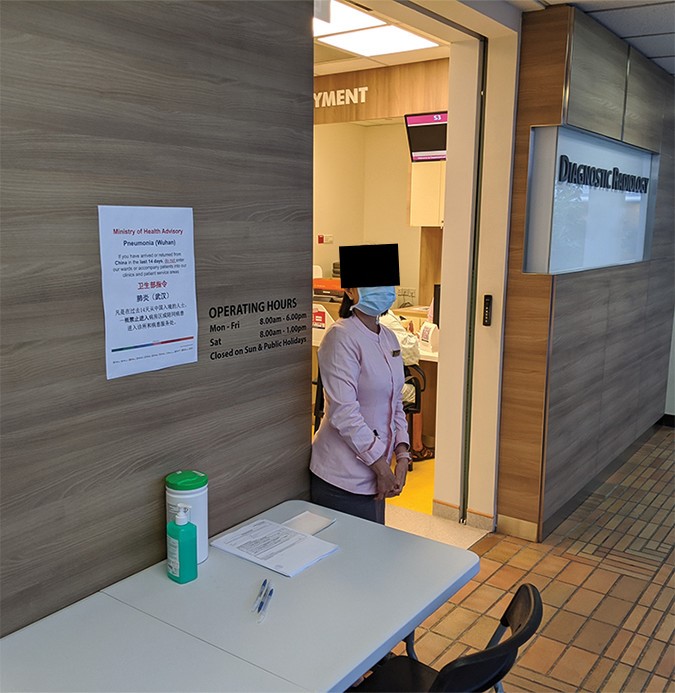
    Fig. 1—Photograph shows screening station setup at radiology department entrance in early phase of outbreak, including staff member wearing mask. These smaller department-level screening stations were subsequently replaced by larger screening facilities at entrances to each building. Obscuring of facial features has been applied for privacy reasons for publication.
    • Share information so that all team members understand moment-to-moment changes in risks and resources needed to safely manage patients.
    • Personal protection equipment must be made available and properly donned and duffed.
    • Potentially infected patients must be identified and isolated.
    • Ideally, dedicated CT scanners will be identified and managed for high-risk patients.
    • Physical security and access control with proper signage must be assured (Fig. 1).
    • Alternate decentralized work areas should be identified.
    • Interventional radiology procedures should be modified for safety and efficiency.
    • Radiologists must rapidly report potential COVID-19 findings electronically and by telephone conversation, when appropriate.

    So, what’s going on in Singapore today? As of April 14, 2020, there were just over 1,300 active cases of COVID-19 in the country. Of these, 1,287 patients were hospitalized but in stable condition, while 28 were listed as critical. Singapore recorded its 10th death from COVID-19 on April 14.

    Similarly, Hosseiny et al. compared the clinical and imaging findings of COVID-19 with those of two previous coronavirus infections: SARS and Middle East respiratory syndrome (MERS). There are similarities, but there are differences, too. Clinical signs and symptoms of COVID-19 include fever, dyspnea, and dry cough. Complaints of sore throat and diarrhea are less common in most reported cases, though there is substantial variation in presentation other than fever. Typical COVID-19 findings on CT include multilobar ground-glass opacities (GGOs) often with consolidation. Normal CT, as seen in perhaps 15%–20% of scans, does not exclude SARS-CoV-2 infection. As expected, consolidation is an indicator for poor prognosis. Pulmonary fibrotic changes after recovery are less well-described.

    Open Access COVID-19 Resources

    ARRS is committed to providing all radiologists with open access to the latest imaging research on COVID-19 to help understand the imaging features associated with coronavirus.

    In Wuhan, Hubei, China, Han and colleagues described early clinical and CT manifestations of COVID-19 pneumonia. Clinical manifestations in the 108 patients they studied were fever in 94 (87%), dry cough in 65 (60%), and fatigue in 42 (39%) patients. Laboratory findings included normal WBC count in 97 (90%), normal or reduced lymphocytes in 65 (60%), and high-sensitivity C-reactive protein elevation in 107 (99%) patients. CT distribution included one lobe in 38 (35%), two or three lobes in 24 (22%), and four or five lobes in 46 (43%) scans. Most lesions were peripheral (97 [90%]) and patchy (93 [86%]). GGOs were seen in 65 (60%) scans, with consolidation in 44 (41%) scans. The size of opacities varied from less than 1 cm (10 [9%]) to more than 3 cm (56 [52%]). Vascular thickening was noted in 86 (80%), the “crazy-paving” pattern was found in 43 (40%), air bronchograms were seen in 52 (48%), and the halo sign appeared in 69 (64%) CT scans.

    Zhou and colleagues, also in Wuhan, described their findings in 62 patients with COVID-19 pneumonia. They emphasized GGOs and bronchial distortion as signs of COVID-19. Again, as of today, Wuhan seems to be doing well. China has lifted its 76-day lockdown, and the city is reemerging from the coronavirus crisis. From various news reports, you can see that the citizens of Wuhan are wearing protective masks—some of them better than the masks that we have in the United States.

    Meanwhile, in Shanghai, China’s most populous city, Cheng and colleagues pointed out that frontline physicians and radiologists should consider the diverse imaging presentations of COVID-19. A reverse transcription–polymerase chain reaction (RT-PCR) test remains necessary for patients with uncertain imaging findings, and testing is crucial for control of the outbreak—especially during the early period, when patients’ exposure history may be unknown.

    Back in Hubei Province, Li and Xia from Tongji Hospital reported that, from their early experience, CT had a low rate of missed diagnosis of COVID-19 (3.9%, 2/51) and thus, “may be a standard method for the diagnosis of COVID-19 based on CT features.” The co-authors explained further: “Rapid diagnosis can lead to early control of potential transmission. With CT diagnosis of viral pneumonia, patients with suspected disease can be isolated and treated in time so that the management of patients will be optimized, especially for the hospitals or communities lacking nucleic acid testing kits.” They concluded, however, that “for the identification of specific viruses, CT is still limited,” also noting that “it is valuable for radiologists to recognize that the CT findings of COVID-19 overlap with the CT findings of diseases caused by other viruses.”

    From Hunan, China, Zhao et al. reported on the relationship between chest CT findings and clinical conditions of COVID-19 pneumonia in a multicenter study of 101 patients retrospectively collected from four institutions. Most patients, 70%, were 21–50 years old, and 5% of the patients had family outbreaks. Fever was the onset symptom for 78% of patients. Fourteen patients in the emergency group were older than those in the nonemergency group. Most patients with COVID-19 pneumonia had GGOs (87 [86%]) or mixed GGOs and consolidation (65 [64%]), vascular enlargement (72 [71%]), and traction bronchiectasis (53 [52%]). Lesions were more likely peripheral (88 [87%]) and bilateral (83 [82%]) and lower lung predominant (55 [54%]) and multifocal (55 [54%]).

    Salehi and colleagues published a nice systematic review of imaging findings in 919 patients with COVID-19. They concluded that although the majority of COVID-19 mortalities occur among patients with acute respiratory distress syndrome in the ICU, “in a patient population with low pretest probability of [SARS-CoV-2] infection, the typical imaging features should be interpreted with caution.”

    One of the most unique papers AJR has published came from Wuhan. Liu et al. authored a preliminary analysis of the pregnancy and perinatal outcomes of women with COVID-19 pneumonia. Of the 15 pregnant women with chest CT-documented COVID-19, 11 had successful deliveries (10 cesarean, one vaginal) and four were still pregnant (three in the second trimester, one in the third) at the time of publication. Importantly, there were no abortions, neonatal asphyxias, neonatal deaths, stillbirths, or neonatal SARS-CoV-2 infections in any of the newborns. More recently, some papers have confirmed early-onset infection in neonates born to mothers with COVID-19, but mother-to-child transfer was not seen in this initial study of 15 patients.

    Huang et al. in Wuhu, China analyzed 25 patients with RT-PCR-documented COVID-19. CT scores were rated 0–35 based on extent and intensity of lung involvement. Data were separated into two groups, based on time from symptom onset to diagnosis and treatment: group 1 was patients for whom this interval was less than or equal to 3 days and group 2 was those for whom the interval was greater than 3 days). CT scores were plotted against time, and after analyzing the resulting curves, the mean peak CT score was 10 and 16 for group 1 and 2, respectively, and the mean time to disease resolution was 6 and 13 days, respectively. The last CT scores were lower for group 1 than for group 2 (p = 0.025), which led to the conclusion that timely diagnosis and treatments are keys to providing a better prognosis for patients with COVID-19.

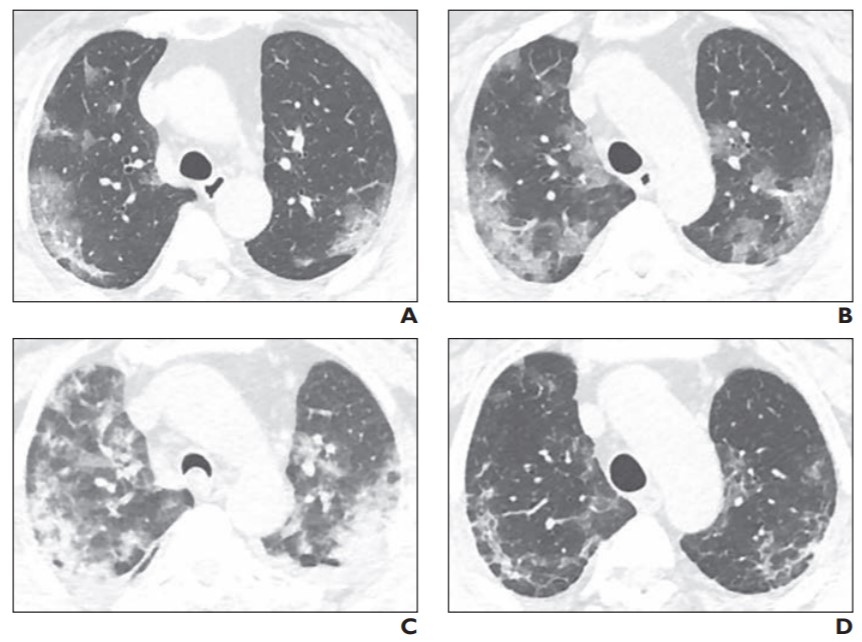
    In early encounters with COVID-19 pneumonia, typical chest CT findings created the impression that CT could successfully screen for infected patients (Fig. 2).

    Fig. 2—59-year-old woman with coronavirus disease (COVID-19).
    A, Initial unenhanced axial chest CT image 4 days after admission shows multiple bilateral subsegmental peripheral patchy and ground-glass opacities with obscure boundaries and mainly subpleural distribution. Neither pleural effusion nor enlarged mediastinal lymph nodes are seen.
    B and C, Unenhanced axial CT images 6 (B) and 12 (C) days after admission and after initiation of treatment shows enlarged lesions; lesions of both lungs are diffuse and patchy compared with previous CT images (A).
    D, Unenhanced axial CT image 22 days after admission shows lesions in both lungs have absorbed gradually after treatment, and subpleural line can be seen.

    On occasion, CT imaging showed asymptomatic opacities while RT-PCR testing was negative. As experiences with less-enriched COVID-19 cohorts were encountered, we learned that CT was considerably less efficient at detecting the many asymptomatic patients with COVID-19, especially compared with nucleic acid testing.

    Logically, asymptomatic community members do not require RT-PCR testing unless there has been a known or potential exposure to COVID-19. CT is best reserved in planning therapy on selected patients with symptomatic COVID-19, or if doctors have reasonable suspicion that RT-PCR is falsely negative.

    Of course, whereas the findings of CT lung opacities typical for COVID-19 may appear to be statistically reliable in the early stages of a pandemic, alternative diagnoses, including other infections and inflammatory conditions, cannot be readily excluded by image pattern alone.

    As the newest article in AJR’s Coronavirus Disease Collection by Raptis and colleagues makes clear, “the radiology literature on COVID-19 has consisted of limited retrospective studies that do not substantiate the use of CT as a diagnostic test for COVID-19.”

  • Responding to a Pandemic MCI

    Responding to a Pandemic MCI

    avatar

    Mark P. Bernstein

    Clinical Associate Professor, Trauma & Emergency Radiology
    NYU Langone Health, Bellevue Hospital

    avatar

    Eric A. Roberge

    Assistant Professor of Radiology
    Uniformed Services University of the Health Sciences

    avatar

    Suzanne Chong

    Associate Professor, Emergency Radiology Division, Radiology and Imaging Sciences Department
    Indiana University Health

    Published April 20, 2020

    Mark P. Bernstein’s “Mass Casualty Incidents: An Introduction for Imagers” was published in the Winter 2020 issue of ARRS’  InPractice magazine. Below, Bernstein et al. provide a primer for hospitals and health care systems responding to the disaster surge of COVID-19.

    The coronavirus disease (COVID-19) pandemic has created a mass casualty disaster of staggering proportions. By April 2020, the novel coronavirus responsible for COVID-19 had forced many parts of the United States into crisis mode, while others race to prepare for the inevitable. In regions where the case numbers have not yet begun to climb, disaster planning teams have time to prepare for a crisis response and implement lessons learned from those who were impacted earlier. The goal is the greatest good for the greatest number of people, so hospitals and health care systems are turning the focus from individual health to population health in their disaster surge response to save as many lives as possible.    

    Mass casualty incidents (MCIs) can be man-made acts of violence, such as mass shootings, bioterrorism, or exploding bridges, or natural disasters in the form of earthquakes, tornados, tsunamis, and pandemics. Tragedies of intentional violence or infrastructure disasters create a sudden surge, demanding a rapid shift in a hospital’s daily routine, and are usually limited geographically—for example, the site of an active shooter or a train derailment. Natural disasters, however, cover much larger regions (i.e., the path of a tornado), whereas, by definition, pandemics know no boundaries.

    One key variable in these disasters is time. Time, in most cases, determines our ability to prepare for and maintain a disaster response. In trauma MCIs, there is a window of time when patients arrive to local hospitals, which is often measured in minutes to hours. In the case of bioterrorism or pandemics, timelines are prolonged, measured in days to weeks. Regarding the ongoing COVID-19 pandemic, the window of time is indefinite and unknown. The disruption of a hospital’s daily routine for prolonged periods of time and the need for resources beyond those available, or worse, outstrips the supply chain, placing severe strain on the health care system. Our best tools to manage these challenges are preparation, planning, and practice.  

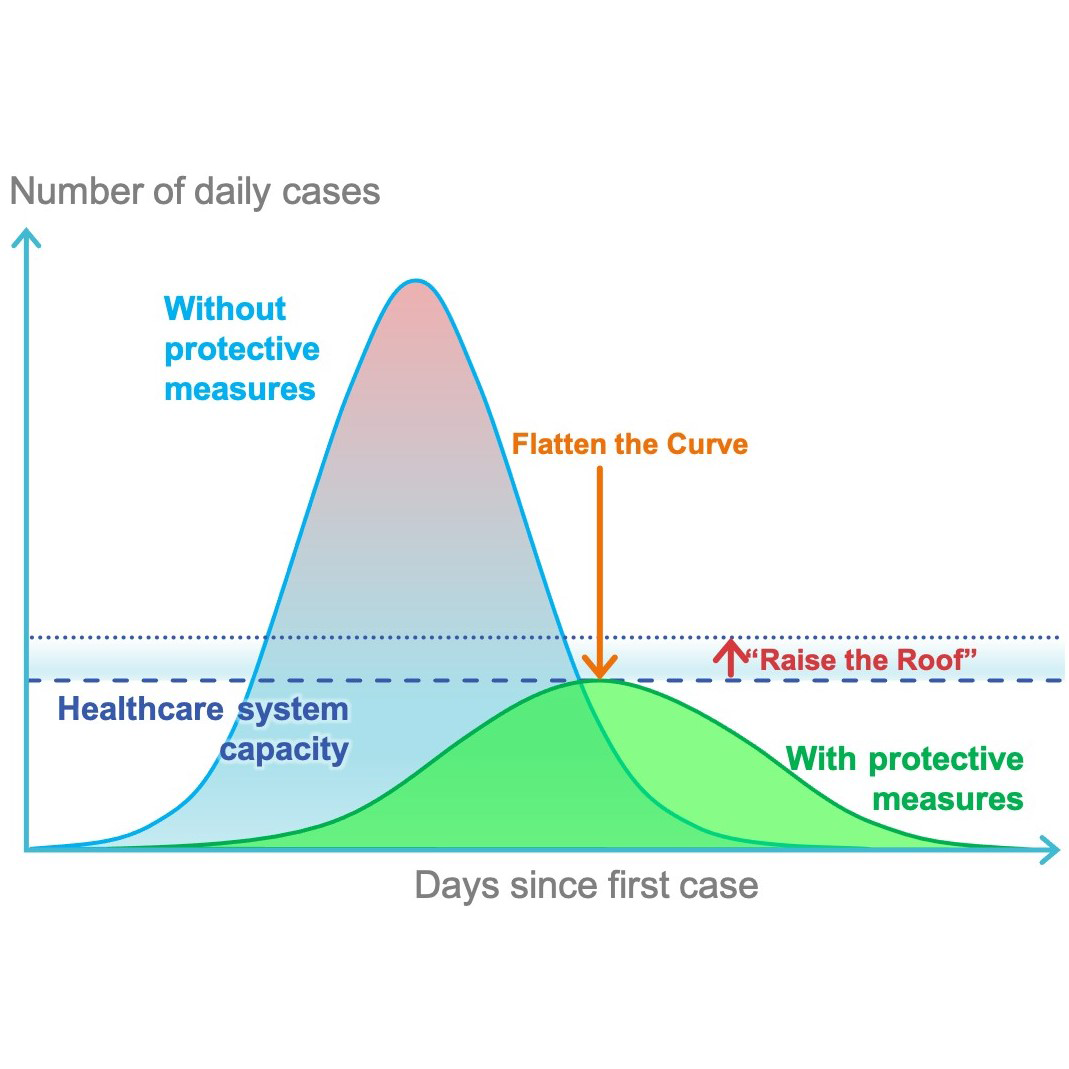
    Preparation and planning take place from the federal and state levels to the community and local health care facility levels. Community planning should be coordinated with local governmental agencies, in accordance with state and federal disaster planning efforts, and integrated with local public health and emergency medical services. With respect to pandemics, community strategies must make every effort to “flatten the curve” in order to break the chain of transmission and slow the spread of infections. At the same time, hospital system strategies “raise the roof” of surge response by increasing health care system capacity (Fig. 1) through predesigned efforts focused on three factors: space, staff, and supplies. The hospital system is the backbone of these three elements.  

    Figure 1 – Community efforts to “flatten the curve” of coronavirus infections often intersect with health care system strategies to “raise the roof” for patient capacity (modified from Disaster Med Public Health Prep with permission from the Society for Disaster Medicine and Public Health).

    Strategies for increasing health care system capacity will include conservation and substitution during a conventional response, adaptation and recycling during a contingency response, and, finally, reallocation of resources during a crisis response—essentially, withholding resources from one patient population to use them more effectively on another patient population. These “raise the roof” strategies involve nuanced ethical and legal considerations that must be addressed in advance, authorized by hospital leadership, and communicated clearly to frontline health care workers.

    System

    Ultimately, the hospital system component directs the response that determines the allocation of the three critical resources of space, staff, and stuff, which are based on supply and demand.

    A robust hospital incident command system provides broad management for a multitude of issues, including: hospital controls (facility access, ventilation), communication (internal and external), community coordination (health care facilities, state and federal agencies, as well as utilities and supply chains), and continuity of emergency health care operation (vis-à-vis utility or other system failures). The hospital incident command should also determine and communicate which disaster response is being utilized. Disaster response can be described, in escalating intensity, as conventional, contingency, and crisis, dependent on surge severity and resource availability. The more severe the surge, the fewer the resources; the lower the hospital’s capacity to take care of victims, the more quickly the disaster response must shift into a higher mode (Fig. 2). 

    Space

    Upon declaration of an MCI, efforts must be made to free up physical space for patients. The size and nature of the disaster will dictate the scope and speed necessary. 

    Figure 2 – As the hospital incident command system escalates the intensity of disaster response—from conventional to contingency to MCI—the minimum acceptable standard of care for patients is diminished (modified from Disaster Med Public Health Prep with permission from the Society for Disaster Medicine and Public Health).

    The conventional response is for surges causing a 20% increase in patients beyond normal capacity. In this situation, all staffed beds are made available and filled. Elective procedures are postponed or cancelled, and patient discharge plans are activated to dedicate more space and empty beds to the surge.

    A contingency response is used for surges that are twice a hospital’s capacity and demands more aggressive actions. As the numbers of patients greatly exceed the available hospital and critical care beds, hospital spaces designed for other purposes, including step-down units, observation units, and procedure suites, can be repurposed to recruit more space to bed patients. Transferring patients to other available facilities for ongoing, nonemergent care can be initiated.

    A crisis situation completely overwhelms a health care facility. Patients fill hallways, and makeshift spaces, such as tents and offices, need to be devised. Erecting tent hospitals with intensive care units in city parks, converting convention centers into field hospitals, and docking of the United States Naval Ship (USNS) Comfort in Manhattan and USNS Mercy in Los Angeles are evidence that our nation is in crisis because of the COVID-19 pandemic.

    Staff

    As more space becomes available, achieving appropriate staffing and obtaining adequate supplies for the surge of patients is vital. The hospital incident command system should be convened for action as soon as a disaster is declared to urgently alert and mobilize necessary staff. The type of injuries that are expected (e.g., blunt trauma, penetrating trauma, or biological agent) will determine the type of staff best suited to respond. If staffing levels are insufficient, measures to increase staffing may be warranted, including expanding the scope of responsibilities, lengthening shifts, and enlarging patient-to-nurse ratios.  

    In a conventional response, trained and credentialed staff are able to care for patients with minor modifications, while maintaining usual standards of care.

    The standard of care is challenged in a contingency response, as adequately trained staff must train and supervise off-service staff to safely provide care. Bringing in additional staff should be considered, and outside staff need to be given emergency privileges and credentialing.     

    A crisis response demands staff to perform clinical functions outside their usual domain. Aggressive staff recruitment and rapid training are necessary to meet the patient care demands and volume. During crisis mode, triage becomes necessary to ensure that acceptable care is provided for the largest number of people. Over- and under-triage can result in higher mortality rates. 

    Supplies (“Stuff”)

    Supplies include medications, medical equipment, and personal protective equipment (PPE). Considerations must also be made for laboratory reagents, diagnostic testing, as well as for food, water, and linens.

    The hospital system must be aware of onsite and offsite supply storage and availability through supply chains. The ability to adapt, reuse, and reallocate becomes necessary in both contingency and crisis situations.

    In the current COVID-19 pandemic, we are witnessing contingency and crisis responses. Hospitals are experiencing severe shortages of ventilators and PPE, meaning patients may be deprived of life-saving care and health care providers are likely to be infected with dire, cascading ramifications.

    Radiology Department Response

    A departmental incident command team should be in place to implement a disaster management plan and engage in clear and consistent communication. The radiology department must have containment and mitigation strategies that ensure the safety of all staff and patients being imaged. For COVID-19, these measures include ensuring adequate PPE, especially for frontline technicians performing imaging studies, enforcing physical distancing, and limiting in-person interactions. Remote reading should be instituted, where possible. Decontamination protocols must be defined and executed. Nonemergent studies should be halted, including interventional procedures, to preserve PPE and limit exposure.

    All real-time changes to address incident-specific issues should be frequently updated and communicated. Implementing these types of measures allows radiology departments to provide safe and appropriate care during surges and helps to ensure sustainable operations.

    The lessons we learn from responses nationally and internationally should be incorporated into our hospital and departmental MCI and disaster planning process. Our ability to plan and prepare by focusing on system, space, staff, and stuff will make all the difference in the number of lives saved.

    Suggested Reading

    1. Christian MD, Devereaux AV, Dichter JR, Rubinson L, Kissoon N. Introduction and executive summary: care of the critically ill and injured during pandemics and disasters: CHEST consensus statement. Chest 2014; 146:8S–34S
    2. Institute of Medicine (US) Committee on Guidance for Establishing Crisis Standards of Care for Use in Disaster Situations; Altevogt BM, Stroud C, Hanson SL, Hanfling D, Gostin LO, eds. Guidance for establishing crisis standards of care for use in disaster situations: a letter report. Washington, DC: The National Academies Press, 2009
    3. Institute of Medicine (US) Committee on Guidance for Establishing Crisis Standards of Care for Use in Disaster Situations; Hanfling D, Altevogt BM, Viswanathan K, Gostin LO, eds. Crisis standards of care: a systems framework for catastrophic disaster response. Washington, DC: The National Academies Press, 2012
    4. Institute of Medicine (US) Committee on Crisis Standards of Care: A Toolkit for Indicators and Triggers; Hanfling D, Hick J, Stroud C, eds. Crisis standards of care: a toolkit for indicators and triggers. Washington, DC: The National Academies Press (US), 2013

    The views expressed are those of the authors and do not reflect the official policy of the Department of the Army, the Department of Defense, or the U.S. Government.

  • Board Certification: An Important Marker

    Board Certification: An Important Marker

    avatar

    N. Reed Dunnick

    Associate Executive Director Diagnostic Radiology
    American Board of Radiology

    Published April 10, 2020

    Along with the Radiological Society of North America, American College of Radiology, American Radium Society, and American Medical Association Section on Radiology, the American Roentgen Ray Society (ARRS) co-sponsored the founding of the American Board of Radiology (ABR) in 1934. The mission of the ABR is to certify that our diplomates have demonstrated and maintained the requisite knowledge, skill, and understanding of their disciplines for the benefit of their patients.

    Board certification serves as an important marker for the highest standard of care. It reflects the critical core values of compassion, patient-centeredness, and a commitment to life-long learning. Patients, physicians, medical physicists, health care providers, insurers, and quality organizations look for board certification as the best measure of a physician’s or medical physicist’s knowledge, experience, and skills to provide quality care within a given specialty.

    Board certification and participation in a maintenance of certification (MOC) program has many benefits. It assures patients, privileging committees, payers, and regulators that the physician has successfully completed a training program and continues to expand his or her medical knowledge, which leads to improvements in their practice and patient safety. In 2007, the ABR instituted a requirement for practice quality improvement projects, which must be relevant to one’s practice, achievable, provide measurable results, and likely to improve quality. This remains a major component of the MOC program. Over the years, the number of qualified projects and participatory activities has been greatly expanded to reflect the integration of radiologists into the health care system.

    Meet your MOC Requirements
    Leverage these member-exclusive benefits to meet your educational requirements with the ABR.

    Since the founding of the ABR in 1934, the field of radiology has grown dramatically, and it became increasingly difficult to master the entire field. Thus, separate residency training programs were developed for diagnostic radiology and radiation oncology. (Most recently, a primary residency for interventional radiology has been approved.) Continued advances and the development of new imaging modalities resulted in many diagnostic radiologists restricting their practice domains to some extent. The ABR responded by providing subspecialty certification to reflect the importance of subspecialization. Subspecialty certification was offered for pediatric radiology and vascular and interventional radiology in 1994, for neuroradiology in 1995, and nuclear radiology in 1999. Given the speed with which these many advances in medical science changed the field of radiology, it became apparent that remote board certification was no longer pertinent. Something was needed to assure the public that physicians were keeping up with these new developments. The four subspecialty certificates offered by the ABR were timelimited from their inception, and the last lifetime primary certificates issued by the ABR were given in 2001. MOC would now be required to maintain ABR certification for all but lifetime certificate holders.

    The four components of MOC are:

    1. professionalism and professional standing
    2. life-long learning and self-assessment
    3. assessment of knowledge, judgment, and skills and
    4. improvement in medical practice.

    Originally, these requirements were met by maintaining an unrestricted state medical license in each state of practice, participating in continuing medical education that includes self-assessment, a cognitive exam, and participation in quality improvement projects. The ABR MOC requirements have been modified over the years, based on feedback from our diplomates.

    Initially, a cognitive exam was required to satisfy Part 3 for MOC participants. However, this required radiologists to take time away from their practices and to pay for expenses to travel to a testing center. Furthermore, the cognitive assessment was required only every 10 years, an interval that many considered too long. An improved program was needed that would be meaningful, but not onerous for the diplomates.

    The ABR Online Longitudinal Assessment (OLA) was introduced for diagnostic radiology in 2019, and for interventional radiology, radiation oncology, and medical physics in 2020. Each week, participating diplomates receive an email giving them the opportunity to answer one or two questions. Most diplomates are required to answer 52 questions a year. (Some with multiple certificates are required to answer more questions.) These questions were designed to test “walking around knowledge”—information diplomates should know “off the top of their head,” if asked by a colleague, resident, or patient. Furthermore, it is a learning experience, as the rationale for the correct answers and a reference is provided immediately.

    Reaction to OLA has largely been positive. Many radiologists enjoy receiving two questions every week in their selected areas of practice. Since the “shelf life” of a question is four weeks, diplomates can elect to answer eight questions every four weeks, if they prefer “batching” the questions rather than answering two questions every week. Most radiologists have enjoyed participating in OLA, as it takes only a few minutes each week and does not require travel. Many continue to answer the weekly questions even after completing their yearly requirement of 52 items. More than 20,000 radiologists are now actively participating in MOC.

    Questions for all ABR examinations are written by volunteers and reviewed by a subspecialty committee, before being submitted to be included in the cognitive assessment. The next step is the test assembly meetings, where all questions are again reviewed. Despite this rigorous process, an occasional problematic question may appear on an examination. These are picked up when ABR staff review the results of the exam. The ABR is fortunate to have two psychometricians and multiple experienced exam developers on staff, who review any potentially questionable item. Often, problematic questions are referred to a radiologist member of the Board of Trustees or the appropriate Committee Chair to participate in the decision whether to keep or remove the item from examination scoring.

    ABR OLA Webinar

    Hear directly from ABR leadership as they provide an overview of the new ABR OLA program, which replaces the every ten-year MOC exam.

    The ABR is a non-profit organization, which is highly dependent upon its many volunteers. The ABR has more than 900 diagnostic radiologists serving as volunteers on 68 different committees. Most of the paid office staff live in the Tucson, Arizona area and work at the ABR office building. Volunteers do much of their work electronically, but they do have periodic committee meetings in the Chicago testing center, near O’Hare airport, or at ABR headquarters in Tucson.

    The volunteers contribute their time and expertise in writing questions, reviewing them for image quality and appropriateness as well as for constructing examinations. Before an examination is administered, another group of volunteers sets the passing standard (cutscore) using the Angoff Method. The Angoff Method is done by having a group of subject matter experts— many of whom are residency program directors—evaluate each item to estimate the proportion of minimally competent candidates who would correctly answer the item. The cutscore is the score that the panel estimates a minimally qualified candidate would receive. This is the legally defensible method used for many high-stakes examinations in the United States.

    The goal of the ABR is to conduct examinations in which the candidates are comfortable and can do their best in demonstrating their knowledge. Thus, videos have been created to demonstrate the examination experience in both Chicago and Tucson. The ABR also communicates with their diplomates, candidates for certification, and the public through a variety of other means. The ABR has a booth at several of the larger radiology meetings to provide in-person answers and advice to attendees. The BEAM is the ABR’s newsletter that has recently increased from three to six issues a year. The ABR’s blog received more than 23,000 views last year. Additional communication efforts, which began in November 2018, include the social media outlets of Facebook, Twitter, Instagram, and LinkedIn.

    The American Board of Radiology, along with the other 23 American Board of Medical Specialty member boards, strives to advance our field, improve patient care, and protect the public by assuring that our diplomates have acquired and maintained the requisite knowledge and skills to be effective practitioners. Board certification is an important marker of those attributes.

  • An Emergency Radiologist’s Perspective on Traumatic Vascular Injuries

    An Emergency Radiologist’s Perspective on Traumatic Vascular Injuries

    avatar

    Claire K. Sandstrom

    Associate Professor, Emergency Radiology
    University of Washington

    Published April 23, 2020

    Advancements in the accessibility, speed, and image quality of MDCT in the last 20 years have guaranteed that MDCT is the preferred imaging modality for evaluation of most conditions presenting in the emergency department, and this is particularly true for imaging after trauma. Vascular injuries, including those involving the thoracic and abdominal aorta, abdominal mesentery, pelvis, cervical vessels, and upper and lower extremities, are an uncommon but potentially lethal outcome of both penetrating and blunt trauma. Historically, diagnosis of vascular injuries relied on open exploration or conventional catheter-based angiography (CTA), both of which are invasive, time-consuming, and not broadly accessible. Today, however, the diagnosis or exclusion of many of these injuries is made on MDCT, oftentimes obviating the need for more invasive techniques. The timing and type of endovascular repair, particularly for aortic injuries, has also evolved.

    Most deaths from traumatic aortic injuries still occur at the scene or before the patient reaches the hospital. However, those who reach the emergency department and undergo imaging can now be treated with a high rate of success. The majority of traumatic thoracic aortic injuries (TTAI) are found at the aortic isthmus. Injuries are found less commonly at the aortic root, ascending aorta, distal descending aorta, or at branch vessel origins, with multifocal injuries in up to 18% of patients. Although most aortic injuries are associated with high-energy trauma, there is no consensus as to the precise definition of “high-energy.” Furthermore, direct chest trauma or visible external signs of chest trauma are not necessary for the diagnosis. Therefore, liberal screening with chest CTA is encouraged in any patient with more than minimal deceleration injury.

    Initial screening for mediastinal hematoma may be performed with a portable chest radiograph in many institutions. Signs suggesting mediastinal hematoma, and thus raising the possibility of a surgically relevant aortic injury, include right paratracheal stripe thickening, superior mediastinal widening, aortic arch enlargement or irregularity, opacification of the aortopulmonary window, rightward displacement of the trachea or enteric tube, inferior displacement of the left mainstem bronchus, obscuration of the descending aorta, widening of the paraspinal lines, or apical capping. These radiographic features are neither sensitive nor specific, and absence should not preclude chest CTA in high-risk trauma victims. Contrast-enhanced chest MDCT has very high sensitivity and a negative predictive value for acute aortic injuries, and it should be obtained in all at risk patients. Thoracic CTA with cardiac gating or ultrahigh pitch is the diagnostic study of choice, but nongated CTA is sufficient in most patients. Intimal flaps, intraluminal thrombus, intramural hematoma, irregular external aortic contour, focal luminal dilation or saccular outpouching (also known as pseudoaneurysm), or active extravasation are direct signs of aortic injury. Injuries can be graded according to the Society of Vascular Surgery (SVS) system or using a newer system of minimal/moderate/severe injuries that more directly guides management. Minimal aortic injuries have no external aortic contour deformity and intimal tear or intraluminal thrombus less than 10 mm in size (equivalent to SVS grade 1); these injuries do not require operative intervention and instead receive antiplatelet therapy for 4–6 weeks, with optional follow-up imaging. Moderate and severe TTAIs require surgical intervention.

    Between 2002 and 2014, mortality from blunt TTAI decreased from 46.1% to 23.7%, largely as a result of increased use of endovascular rather than open repair. One important recent trend in the management of TTAI involves timing of intervention. Although the risk for rupture of contained TTAI is highest in the first 24 hours, mortality rates and rates of paraplegia and stroke are lower when repair is delayed until after the overall condition of the patient can be stabilized. For all but the most severe aortic injuries—those with active extravasation or a very large contained rupture with large periaortic hematoma—repair is performed in 1–3 days, when the patient’s condition is more stable and concomitant injuries are considered survivable. In the interim, antihypertensives are used to reduce wall stress and risk of rupture.

    Only about 5% of blunt aortic injuries involve the abdominal aorta. Sufficiently rare that many radiologists may never encounter one during their careers, this injury should be specifically sought when patients present with blunt abdominal trauma, such as a seatbelt sign or abdominal impact on the steering wheel, and have spinal fractures (particularly flexion-distraction injuries), duodenal or small bowel injuries, or pancreatic injuries. Isolated blunt abdominal aortic injuries (BAAI) are also rare. Two-thirds of BAAIs occur between the renal arteries and the aortic bifurcation, and up to one-quarter also have injuries involving the thoracic aorta. Abdominal CTA is the diagnostic study of choice, though venous-phase abdominal MDCT is sufficient for diagnosis and preintervention planning in most cases. In patients stable enough to be evaluated on MDCT, the most common appearance of BAAI is intimal flaps or intimal thrombi without external aortic contour deformity. Pseudoaneurysms of the abdominal aorta are only seen in 16% but require repair, either open or endovascular, depending on location. In the absence of external contour abnormality, BAAI can be managed nonoperatively with antiplatelet therapy and beta blockers. It is important to note that neither TTAI or BAAI can be excluded on a unenhanced CT because injuries, particularly intraluminal thrombi and intimal flaps, may not be accompanied by periaortic hematoma or stranding.

    Injuries of the mesenteric vasculature are also uncommon in blunt trauma patients, more often resulting from penetrating trauma. Unfortunately, these are frequently lethal due to exsanguination, reflecting the difficulty in obtaining control of the proximal superior mesenteric artery (SMA), as well as back-bleeding from the valveless portomesenteric venous system. Though uncommon at initial laparotomy, bowel infarction and subsequent sepsis and multiple organ system failure are responsible for the bulk of delayed deaths from mesenteric vascular injury. Classification systems by the American Association for the Surgery of Trauma-Organ Injury Scale (AAST-OIS) and by Fullen et al. are both anatomy-based, reflecting the greater surgical difficulty and poorer outcomes associated with more proximal mesenteric arterial or venous injuries. Although immediate operative evaluation is appropriate in any patient with penetrating trauma to the peritoneum or with blunt trauma in extremis, patients with hemodynamic stability following blunt abdominal trauma can be imaged with contrast-enhanced MDCT. On MDCT, direct signs of surgically important mesenteric vascular injuries include mesenteric vascular beading, abrupt termination, or active extravasation. Intraperitoneal low- or intermediate-density free fluid is highly sensitive for either bowel or mesenteric injury, as is abnormal bowel wall thickening or enhancement, and surgical exploration is appropriate when any of these are found on MDCT. The absence of intraperitoneal free fluid has a high negative predictive value for surgically important mesenteric or bowel injury. Isolated mesenteric stranding or hematoma without active extravasation does not necessarily need surgical exploration, but these patients should be monitored carefully for delayed presentation of CT-occult bowel injury or mesenteric injury resulting in bowel ischemia.

    Hemorrhage from pelvic ring injuries can be significant and life-threatening. Arterial hemorrhage accounts for 15–20% of pelvic bleeding, and low-pressure bleeding from venous structures or fractured edges of cancellous bone account for the remainder. These low-pressure bleeding sites are usually controlled by pelvic sheeting, external fixation, or internal pelvic packing, whereas arterial hemorrhage is amenable to endovascular control. Early triage to angiography may be considered for those patients with obturator ring fractures displaced at least 1 cm or pubic symphyseal diastasis of at least 1 cm, as these are independent predictors of major hemorrhage. If a patient with pelvic ring injuries is hemodynamically stable, multiphase MDCT can improve the sensitivity and specificity of detection of pelvic bleeding. Ideally, an arterial phase is obtained to identify arterial injury, as opposed to venous injury, and an additional phase differentiates active bleeding from pseudoaneurysm. Unenhanced MDCT or dual-energy CT with virtual unenhanced images may be necessary to identify bone fragments that mimic pseudoaneurysm or active extravasation. Absence of contrast extravasation on MDCT has a high negative predictive value for clinically significant pelvic bleeding. When conventional catheter-based pelvic angiography is performed, whether before or after MDCT, injection of the bilateral internal iliac veins and the bilateral external iliac veins should be performed.

    Most peripheral vascular traumatic injuries result from penetrating trauma in civilian or military settings and involve the femoral or popliteal arteries of the lower extremity. Following blunt trauma, popliteal arterial injuries are found in 30% of knee dislocations, as well as accompanying some displaced femoral or tibial plateau fractures. Open mid-shaft tibial and fibular fractures commonly have injuries to the anterior and posterior tibial arteries. Although traumatic injuries of the torso usually take precedence over extremity injuries, active extremity bleeding may require direct pressure, tourniquet, or direct clamping to prevent life-threatening hemorrhage. Potential complications of peripheral vascular trauma include exsanguination, acute ischemia, tissue necrosis, reperfusion injury, and need for amputation. Thus, prompt diagnosis and treatment of peripheral vascular injuries aims to prevent life-threatening blood loss and restore perfusion to the extremity, with increased likelihood of limb salvage, if definitive treatment is performed within 6 hours.

    Lower extremity CTA is the diagnostic study of choice for noninvasive evaluation of lower extremity vascular trauma. Any patient with hard signs of vascular trauma, including active hemorrhage, an expanding or pulsatile hematoma, a wound with bruit or thrill, a distal pulse deficit, or distal ischemic changes, should undergo CTA, unless emergency surgical intervention is necessary. Even those with lower extremity injuries, without hard signs of vascular injury, may still benefit from lower extremity CTA if the ankle-brachial index (ABI) is reduced below 0.9 (sensitivity 87–100%, specificity 80–100%). For those with ABI above 0.9, the likelihood of vascular injury requiring surgery is low, though these patients may still be observed with serial exams for 24–48 hours. One important protocol issue with lower extremity CTA on newer ultrafast scanners is that the scan may “outrun” the contrast bolus in the distal lower extremity, particularly in patients with lower cardiac output. For this reason, at my institution, our lower extremity CTA protocol includes the arterial phase from abdomen or pelvis through the toes, followed 7 seconds later by an immediate delayed (late arterial) phase from knees to toes. Inclusion of both lower extremities in the reconstructed FOV is helpful, even if the injury is unilateral, to provide internal comparison.

    Upper extremity CTA is less commonly performed and is more variable in technique. If the upper extremity CTA is performed in isolation, the arm may be positioned above the patient’s head to improve image quality and reduce radiation dose, as long as the patient’s injuries permit such positioning, whereas if the CTA is performed concurrent with a chest CTA, the arm can be positioned at the patient’s side. Always consider contrast injection contralateral to the injured arm to avoid a nondiagnostic scan because of venous extravasation or extensive streak artifact. If both upper extremities require evaluation, a central line should be used for contrast injection. Furthermore, the suspected location of vascular injury may affect the scan range. Proximal injuries, such as those from scapulothoracic dissociation, may only require evaluation of the upper arm to the level of the elbow. If more distal evaluation of the forearm, hand, or fingers is required, some advocate a two-part CTA protocol with different energies and fields of view (100–120kV for aortic arch to elbow, small field of view and 80–100kV for elbow to fingertips, when elbow is positioned above the head).

    CTA findings of vascular injury in the upper and lower extremities requiring intervention include vascular occlusion, dissection, extravasation, transection, pseudoaneurysm, and arteriovenous fistula. Differential considerations include preexisting peripheral arterial atherosclerotic disease, nonocclusive vascular spasm, extrinsic compression from adjacent bone fragments or compartment syndrome, or acute embolic occlusion, such as from proximal aortic injury.

    Vascular trauma requires prompt recognition and appropriate treatment to prevent significant mortality or morbidity. Today, MDCT is by far the most common technique by which these injuries are diagnosed following trauma. Since vascular injuries are uncommon, many radiologists might not feel adept at imaging them, recognizing them, and characterizing them. It is imperative that an arterial phase MDCT protocol be developed for use in high-risk patients, that intravenous contrast be used in all cases, and that suspicious imaging findings are conveyed to the trauma team appropriately and urgently. These patients may benefit from referral to a level 1 trauma center for definitive treatment.


    The opinions expressed in InPractice magazine are those of the author(s); they do not necessarily reflect the viewpoint or position of the editors, reviewers, or publisher.

  • Dial M for Merger: Teleradiology’s Second Act

    Dial M for Merger: Teleradiology’s Second Act

    avatar

    Logan K. Young

    Staff Writer

    Published March 23, 2020

    With technological innovation teeming and networks more globalized than ever before, teleradiology—an imaging practice heavily reliant upon both—would seem uniquely moored to rise with these two tides. As advancement often begets acquisition, and especially as radiology practices continue to amalgamate, some teleradiology experts are floating a seemingly counterintuitive notion: the teleradiology wave could be starting to crest.

    To be sure, long-distance diagnosis has been dialed into imaging for some 30 years.

    In late 1991, University of Kansas researcher Arch W. Templeton boasted in AJR that more than 1,000 cases had been “digitized, transmitted, and printed on our teleradiology system.” Four years later for the journal, Douglas R. DeCorato detailed his after-dark developments, writing “all radiologic studies performed at Roosevelt Hospital between the hours of midnight and 8 A.M. were digitized and then transmitted over a T1 fiberoptic link to the radiology department of St. Luke’s Hospital, 4.8 kilometers away.”

    Transmissions from individual institutions coming in loud and clear, by the summer of 2005, David B. Larson and colleagues had painted the first “comprehensive portrait of teleradiology in radiology practices.” Based upon a 66% response rate from the 970 practices that the American College of Radiology (ACR) surveyed in 1999, as Larson confirmed in AJR, “Seventy-one percent of multiradiologist practices had teleradiology systems in place, using them to interpret 5% of their studies. For solo practices, corresponding statistics were 30% and 14%.”

    Flash forward a scant two years, when Todd L. Ebbert sought to capture and communicate just how big teleradiology had become. His 2007 AJR web exclusive had two distinct objectives: “to describe in detail the use of teleradiology in 2003 and to report on changes since 1999 in this rapidly evolving field.” Armed with the ACR’s Survey of Radiologists from 2003 (sent by mail, ironically), as well as its 1999 Survey of Practices, Ebbert et al. verified that 67% of radiology practices in the United States, “which included 78% of all U.S. radiologists,” had performed teleradiology.

    Almost a decade’s worth of telemedicine would be performed until the first nationally representative approximation of telehealth practices across all medical specialties was published.

    According to the 2016 American Medical Association’s Physician Practice Benchmark Survey, “15.4% of physicians worked in practices that used telemedicine for a wide spectrum of patient interactions.” Said interactions included e-visits, “as well as diagnoses made by radiologists who used telemedicine to store and forward data.”

    Now, nearly three decades removed from AJR’s initial frontline reporting, is the teleradiology revolution running out of steam? Well, the business answer at least is rather hazy.

    Citing a trend analysis from Research and Markets, in 2018, Diagnostic Imaging reported that the global teleradiology marketplace was forecasted to reach $8.2 billion by 2024. Despite that healthy compound annual growth rate, president and chief executive officer of Imaging Consultants, Inc., Lawrence Muroff, cautioned that teleradiology’s market share was likely to shrink over the next three to five years.

    Echoing Muroff’s sentiments, Elizabeth Krupinski, professor and vice chair for research in the department of radiology and imaging sciences at Emory University School of Medicine, indicated a swing allied with artificial intelligence, saying “I can see teleradiology changing as a byproduct of the overall industry shift.”

    And already, less than a year later, as Muroff told Diagnostic Imaging this past September: “Teleradiology is a saturated, mature market that is no longer growing.” “If anything,” he compounded, “it’s shrinking somewhat because, as practices get larger, they have a greater capability of providing comprehensive call themselves.”

    Corporate takeovers of independent radiology practices—what AuntMinnie flagged as one of 2019’s “biggest threats to radiology”—has taken on teleradiology, too. As reporters Brian Casey and Erik Ridley explained: “The rise of corporate radiology companies— which have oftentimes grown by acquiring smaller groups— is turning many radiologists from entrepreneurs into employees. Meanwhile, hospitals continue to expand by swallowing up outpatient centers that once operated independently.”

    The bigger they are, the louder their call, indeed.

    In his inquiry into the October white paper from the ACR’s Corporatization Task Force, Jake Fishman of The Imaging Wire concluded that continuing consolidation within the industry should be expected through 2030, “depending on capital liquidity, legislative/regulatory changes, and market volatility.”

    A newer survey from KPMG tapped 330 corporate, private equity, and investment banking executives in the life science industries for their two cents. And what did this “Big Four” accounting organization find? This year, the health care sector will endure even more absorption than it did in 2019.

    Of course, suffering the slings and arrows of more and more mergers and acquisitions (M&A) doesn’t have to necessarily stymie teleradiology’s forward march.

    In this past November’s issue of AJR, Michael A. Bruno and team pointed out that “in a fully integrated practice model a single group of subspecialist radiologists would provide care seamlessly at all practice sites, either on a rotational basis or by sharing cases through teleradiology or shared PACS systems, across the full spectrum of care.”

    Ultimately, the truest test of tele-harmony writ large depends on who, how, and expressly where you ask.

    The law firm Foley & Lardner’s third end-of-year, state-by-state canvass of telehealth coverage recounted a “sea change” in legislation requiring commercial payers to reimburse providers for virtually rendered services. Yet, two months prior, the assessment from analytics juggernaut J.D. Power noted coast-to-coast consumer adoption of telehealth services as “stubbornly low.”

    Alas, crunching the latest numbers on the international ledger fuzzies things further.

    Worldwide venture funding for digital health, including private equity and corporate venture capital, declined 6% over the last fiscal year. Nevertheless, a Global Market Insights report from March 2019 had predicted that telemedicine’s global share would more than triple by 2025—ballooning from its current $38.3 billion valuation to $130.5 billion.

    In light of all the headline legislation, relentless coups, and exaggerated projections implying the demise of enterprise teleradiology, according to its most thorough clinical evaluation to date, the actual practice of teleradiology is very much alive and well.

    In the December 2019 issue of Journal of the American College of Radiology, incoming AJR editor in chief Andrew B. Rosenkrantz got granular regarding radiologists’ overall “habits, attitudes, and perceptions on teleradiology practice.”

    Defining teleradiology as “the interpretation of medical imaging examinations at a separate facility from where said examination was performed,” Rosenkrantz and his colleagues solicited responses (appropriately enough, via email) from a random sample of 936 ACR members. While a clear majority, 731 respondents, designated their main work setting as non-teleradiology, 85.6% of that cohort indicated they had practiced teleradiology within the past 10 years. Furthermore, 25.4% stated teleradiology comprised a majority of their annual imaging volumes.

    No longer the realm of nighthawks, a staggering 91.3% of respondents said that they had implemented teleradiology during normal business hours, while 44.5% to 79.6% said they had implemented teleradiology over evening, overnight, and weekend shifts.

    In rural areas, 46.2% of American radiologists surveyed by Rosenkrantz reported performing teleradiology, and 37.2% reported performing teleradiology in critical access hospitals.

    Helping working radiologists realize after-hours success and expand coverage for underserved patients, “despite historic concerns,” Rosenkrantz reassured, “teleradiology is widespread throughout modern radiology practice.”

    Like most cutting-edge revolutions, efficacious telemedicine continues to spread.

    From the TeleWOW program in northern Maine connecting more than 50 obese children and young adults with certified health and wellness specialists to the Michigan Department of Health and Human Services’ four-year, $1.6 million federal grant to expand a statewide telehealth platform for epilepsy care management, right now, individual states are the freer laboratories for this digital democracy.

    At the same time, Amazon is paying for workers diagnosed with cancer to physically see specialists down in Los Angeles’ Silicon Beach, while piloting its own virtual health service for employees and their dependents, Amazon Care, led by pulmonary specialist, public health wonk, and defector from Apple, Vin Gupta.

    There’s good news from abroad, too.

    A pilot study just published ahead-of-print in AJR by a team from Germany’s second-largest city and Europe’s third-largest port, Hamburg, christened the concept of maritime telemedicine with the inauguration of a PACS-centered service staffed 24/7 by specialized radiologists at a tertiary hospital on shore.

    So, what do the trade machinations of tomorrow or the next administration’s regulations portend for teleradiology’s next wave, the clinical and the commercial?

    Perhaps a startup like Nines in Palo Alto, California might know those breakers best.

    Fresh out of stealth mode and buttressed by $16.5 million in Series A cash, the mission of this teleradiology company is decidedly asynchronous—assist radiologists in triaging head CT scans through machine learning.

    In other words, M&A, meet AI.