
Summary: Timing determines outcome. When rads recognize subclinical involvement early and proceed to peds specialists, long-term functional outcomes improve dramatically.
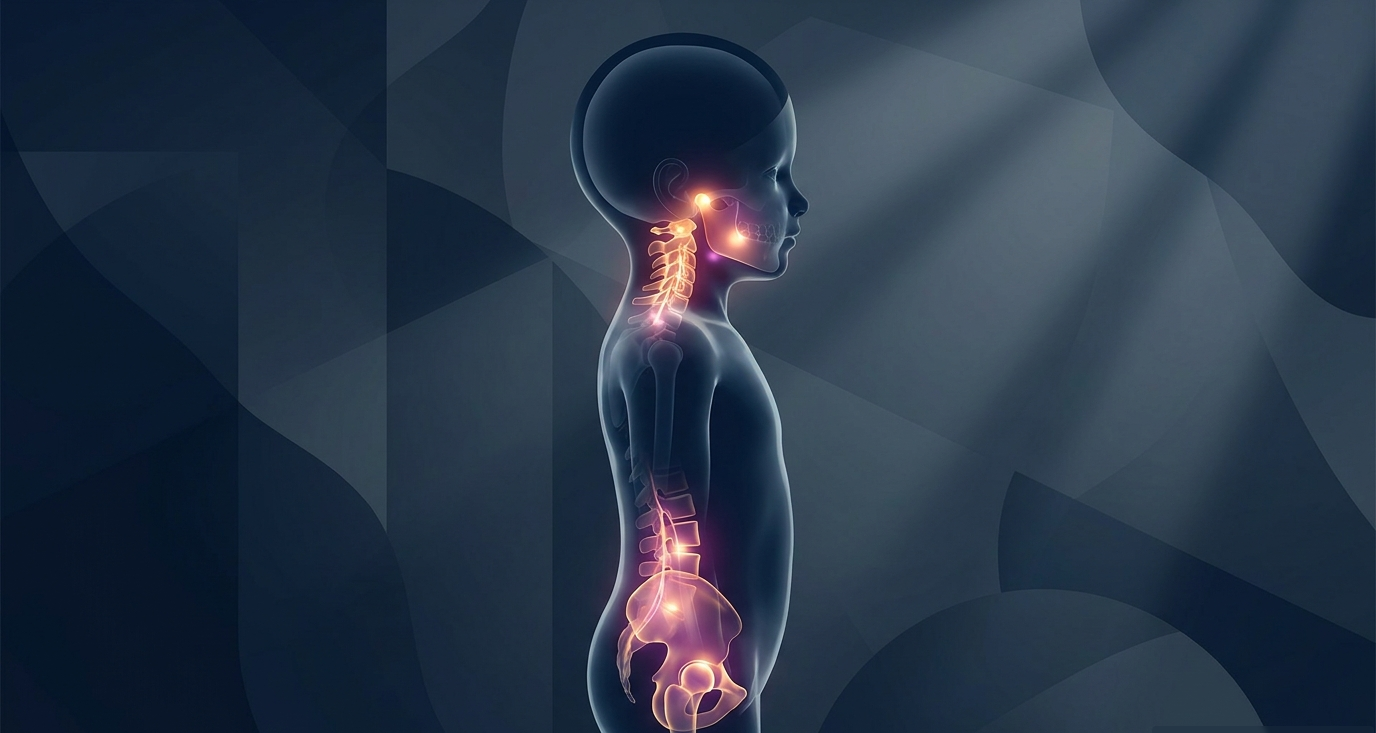
Quiet Confidence: For JIA patients, the absence of symptoms doesn’t exclude active disease. A trio of what Dr. Hamza Alizai dubbed “clinically silent” joints in his ARRS Quick Bytes video harbor inflammation that only MRI can reliably detect.
- Cervical Spine: Early presentations of subtle edema in the dorsal aspect of the odontoid process on MRI (and dorsal dens erosions on CT), alongside facet joint inflammation.
- Unchecked inflammation risks progression to severe atlanto-axial joint fusion.
- Sacroiliac Joints: Sacroiliitis remains an established marker of poor overall prognosis in JIA, leading to routine orders for screening MRI.
- Temporomandibular Joint: Since asymptomatic synovitis is so widespread, rheumatologists maintain an exceptionally low threshold for requesting TMJ MRI during everyday evals.
JIA fundamentally alters joint development, making early detection vital to preventing debilitating long-term sequelae. And because physical exams frequently fail to uncover subclinical synovitis in deep or complex articular structures, MRI—US, too—is essential to ID disease long before irreversible damage manifests on radiographs.
Numbers Game:
- 40%–87% of TMJ MRIs demonstrate positive findings in JIA, regardless of whether active symptoms are reported.
- 71% of JIA patients with active TMJ synovitis are completely asymptomatic.
- ~33% of patients suffer from sacroiliitis, with the highest prevalence seen in enthesitis-related arthritis and psoriatic subtypes.
Leave a Reply