
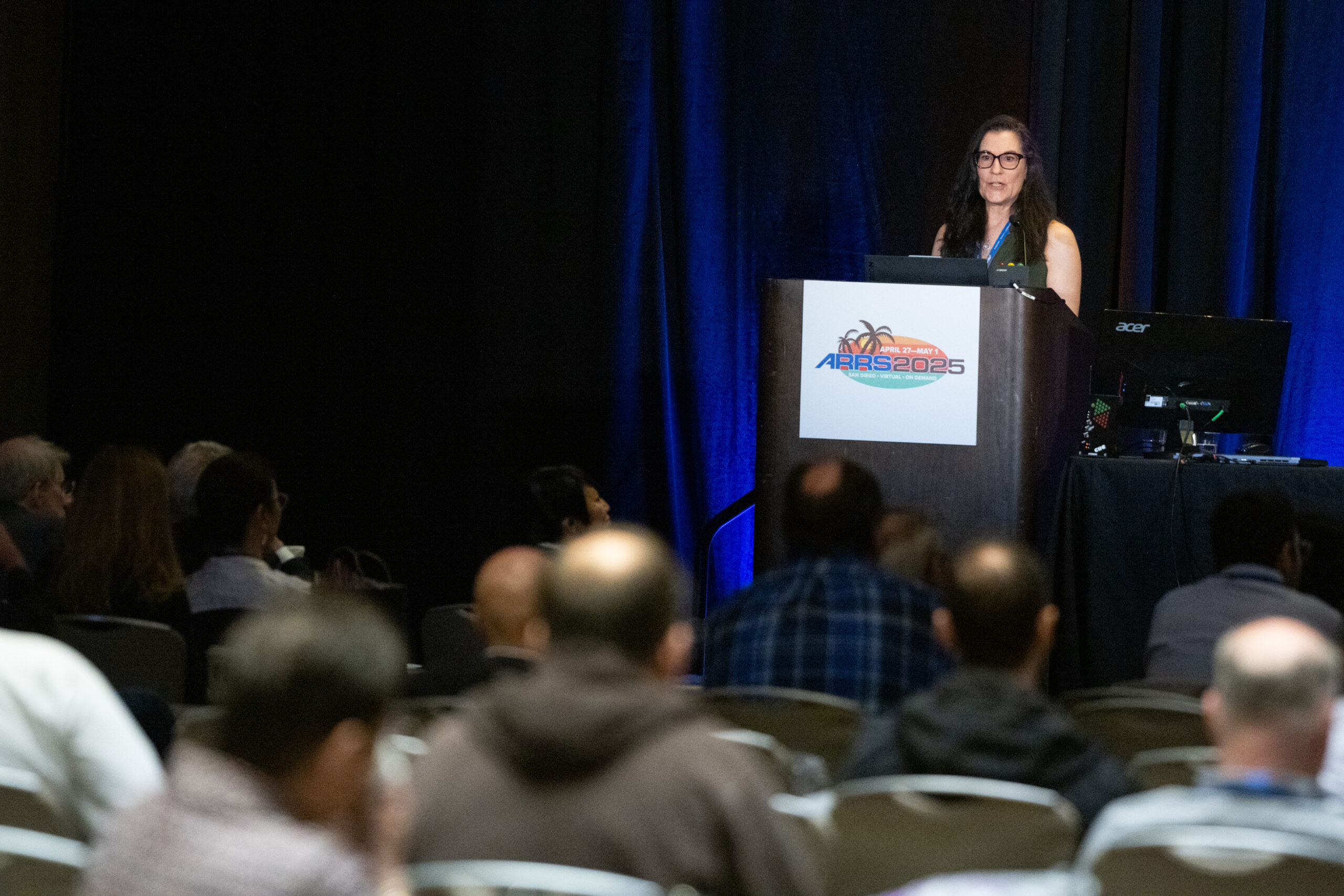
This president’s column will be a departure from my last two discussing serendipity in radiology and medicine. Instead, I would like to focus on a topic that I have thought about for a long time but never dug deeply into the surrounding research; that is, the benefits of volunteering to the volunteer. An organization like the American Roentgen Ray Society (ARRS), simply put, cannot survive without volunteers. ARRS has amazing staff, but like all medical societies, Roentgen Ray relies heavily on its physician and scientist volunteers to organize programs, moderate sessions and speak, govern and peer review abstracts and articles, etc. So, are there benefits of volunteering besides the tangible work that the society derives? Meaning, do volunteers derive benefits from volunteering? The answer is, yes!
And I will divide these benefits into several categories, including academic currency, individual wellbeing and mental health, impact on physical health and mortality, and impact on workplaces and employers.
Academic Currency
For members of a medical society who are also members of an academic department, the opportunities afforded by a society to lead or be a member of committees, to organize or teach learning sessions, to review journal articles, etc. are all ways to prove your academic worth. When a physician or scientist is considered for promotion, they are asked to put together their CV and service, teaching, and research portfolios for review. Depending on the track for promotion (this varies from institution to institution) some form of service on a local (the institution at which you work), regional (state medical societies), national (ACR, ARRS, RSNA, or specialty society) or international level is important and, in some cases, may be required for promotion. Generally, the higher the level of promotion desired (full professor over associate professor over assistant professor over instructor), the more service is required at a regional and national level. Further, engagement with academic colleagues at meetings ensures an individual will be able to suggest names of people to support their quest for promotion with a letter of recommendation. In other words, it is difficult at most institutions to attain the rank of full professor without this volunteer work.
Individual Wellbeing and Mental Health
Controversy exists as to whether volunteering really improves individual subjective wellbeing. There is the question of whether happier people are more likely to volunteer, potentially skewing any survey data that cannot find a way to control for baseline wellbeing. Lawton et al. published a paper in 2021 specifically addressing this issue in a large population (household survey datasets totaling over 245,000 people) in Great Britain [1]. Their study found that controlling for baseline levels of reported wellbeing and happiness, there is still a statistically significant improvement in wellbeing equivalent to a salary increase of £911 per person per year; that is, a person who volunteers would have to experience a salary loss of £911 to bring them to the same average happiness level of a person who does not volunteer. They further found that frequency of volunteering matters; volunteering weekly or more is almost twice as beneficial as volunteering several times a year and that volunteering once a year or less does not improve wellbeing.
Other studies have focused on various aspects of wellbeing. For example, a study of 3,351 adults conducted by UnitedHealth Group found that volunteering lowered stress levels in 78%; volunteers in this study were more likely than non-volunteers to report feelings of calm and peace, good energy levels, and increased sense of purpose [2]. Studies have also shown a positive association of volunteering with increased sense of purpose, optimism, and positive affect [3]. Volunteers also had higher average CASP scores (control, autonomy, self-realization, and pleasure) regardless of the gross domestic product of their country of residence [4]. Further, one study found that the effects of volunteering stop when individuals stop volunteering, supporting a causal relationship [5].
Impact on Physical Health and Mortality
The impact of volunteering on mental health is well-documented. What about physical health and by extension, mortality? Kim et al. published a study in 2020 examining data from 12,998 people over 50 living in the US; the dataset is considered diverse and nationally representative [3]. When adjusting for variables such as socioeconomic status, physical health, health behaviors, personality and other psychosocial factors, their study found that individuals who volunteered at least 100 hours per year (which is equivalent to just under 2 hours a week) compared to those who did not volunteer at all were 44% less likely to die, 17% less likely to have new physical limitations and higher self-rated health. Further, volunteering at this level was also associated with a 12% increased likelihood of frequent physical activity. The effects of volunteering on health were also documented in an analysis of 6 longitudinal panel surveys of Europeans including 267,212 people [6]. In this “mega-analysis,” volunteers had a 13% health advantage (health score 68 in volunteers versus 60 in non-volunteers) and the advantage positively correlated with age (no advantage in individuals less than 40, 26% in individuals in their 70s and 35% in individuals in their 80s). This study also found that the benefits of volunteering were greater in those who experienced poorer health at baseline. Finally, an unusual study of salivary cortisol levels [7] found that in a cohort of 340 middle aged and older adults, cortisol output decreased on days the individuals did volunteer work compared to days they did not meaning their levels of stress hormones were reduced. The authors hypothesize that this positive effect on cortisol may be one mechanism by which volunteering improved health.
Impact on Workplaces and Employers
Beyond the work that is done for an organization by volunteers, are there benefits to corporations and other employers? If people who volunteer outside the workplace are both mentally and physically healthier, an employer can expect lower healthcare costs; further, if workers are less stressed, they are “more present and engaged” elevating job performance [2]. Volunteering can also bring new skills to the workplace, including time management and people skills as well as job specific skills depending on the type of volunteering that is pursued. And, if volunteering with colleagues is encouraged, stronger workplace relationships can result in increased teamwork and goodwill in the workplace.
Not only do our ARRS volunteers have a huge impact on the ARRS, but also the act of volunteering has a huge impact on our volunteers. Thus far, the ARRS has done little to recognize in a meaningful and purposeful manner all the ways in which our volunteers contribute to and enrich our society; we have many volunteers who have given their time and expertise for 20 years or more. In my next column I will introduce and discuss a new volunteer recognition program that will roll out at the 2026 ARRS annual meeting. I hope to see you all in Pittsburgh!
References
- Lawton RN, Gramatki I, Watt W, Fujiwara D. Does volunteering make us happier, or are happier people more likely to volunteer? Addressing the problem of reverse causality when estimating the wellbeing effects of volunteering. Journal of Happiness Studies 2021;599-624
- UnitedHealth Group. Doing Good is Good for You: 2013 Health and Volunteering Study. 2013
- Kim ES, Whillans AV, Lee MT, Chen Y, VanderWeele TJ. Volunteering and subsequent health and well-being in older adults: an outcome-wide longitudinal approach. American Journal of Preventive Medicine 2020;59:176-186
- Morwski L, Okulicz-Kozaryn A, Strelecka M. Elderly volunteering in Europe: the relationship between volunteering and quality of life depends on volunteering rates. Voluntas 2022:33;256-268
- Matthews K Nazroo J. The impact of volunteering and its characteristics on well-being after state pension age: longitudinal evidence from the English longitudinal study of aging. Journal of Gerontology: Social Services 2021:76;632-641
Leave a Reply