
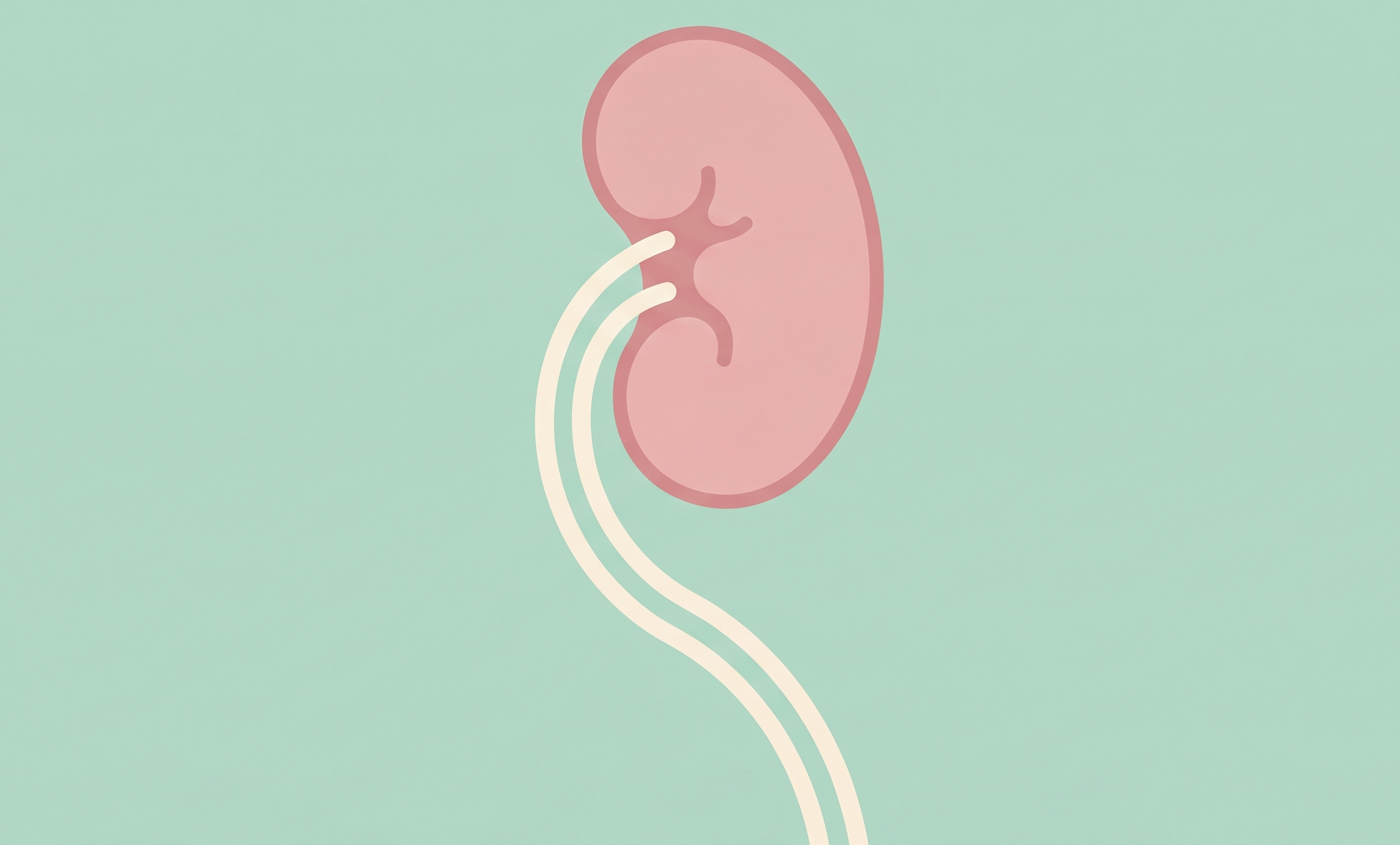
Duplicated collecting systems are the most common congenital urinary tract anomaly. While partial duplications (i.e., bifid ureters) are frequent, typically, complete ureter duplications follow a predictable, um, “vowel-forward” rule.
Case in Context: During his talk on renal and urothelial stones, strictures, mimics, and more for the ARRS Longitudinal Course “Mastering Genitourinary Imaging & Interventions,” Dan Souza, MD, introduced us to a 25YO female with left flank pain. Imaging revealed a dilated upper moiety and ureter inserting ectopically and inferiorly—resulting in significant upstream hydroureteronephrosis.
Weigert-Meyer: This rule defines the relationship between those two moieties in a complete duplication:
- Upper Pole: The ureter inserts inferomedial to the lower pole ureter. It is almost always associated with an ectopic insertion and a ureterocele, making it highly prone to obstruction.
- Lower Pole: Inserting superolateral to the upper pole ureter, this moiety is classically more prone to vesicoureteral reflux.
RadFYI: Use what Dr. Souza dubbed the “Vowels-Meyer Rule” to help recall the specific insertion patterns and their associated pathologies: upper, inferior, ectopic, obstruction, ureterocele.
Leave a Reply