
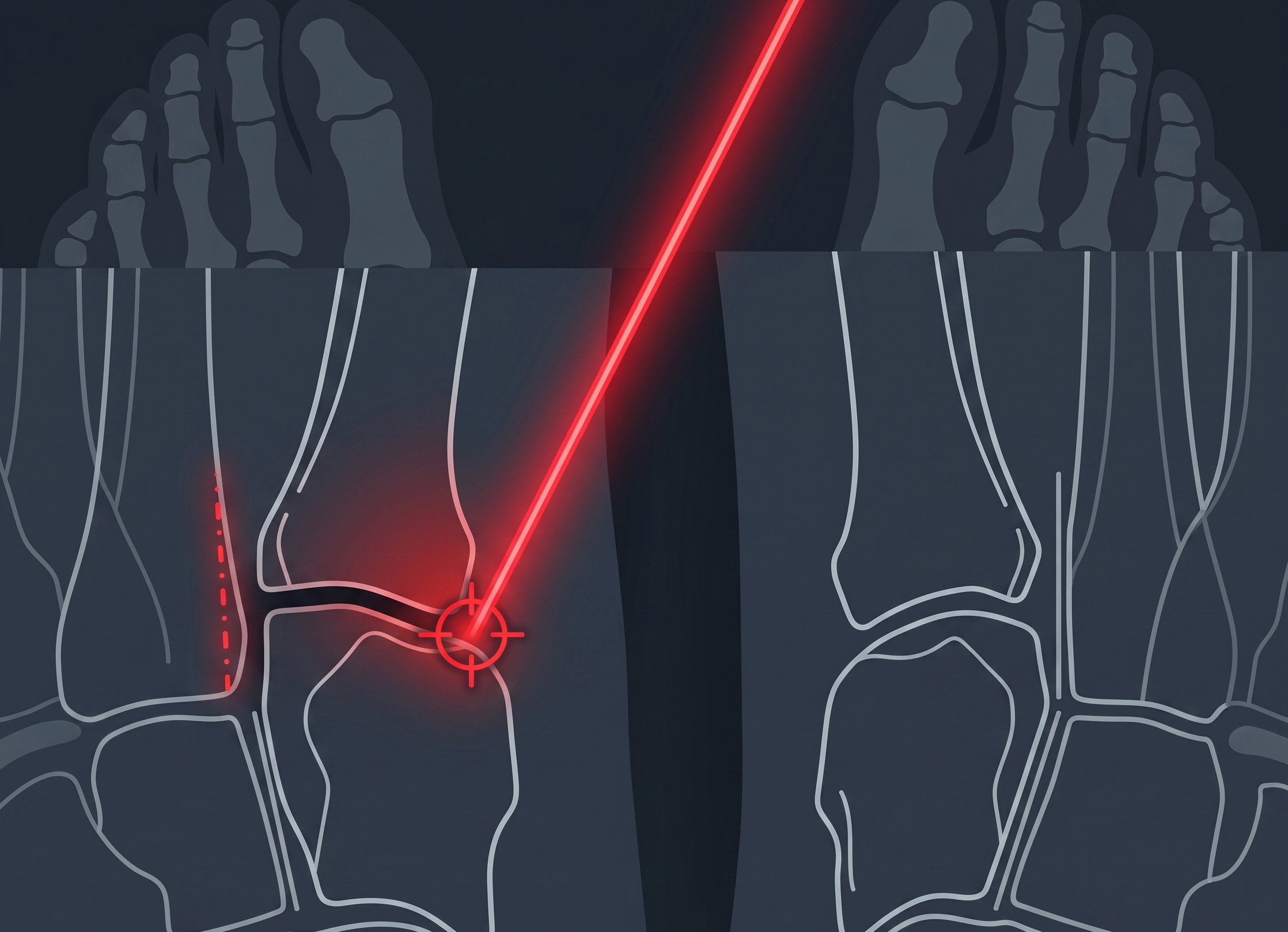
Lisfranc injuries are notoriously easy to miss; 20% of cases are overlooked on initial clinical exams. Failure to diagnose these injuries often leads to high morbidity and long-term post-traumatic osteoarthritis.
Case in Point: In the case of a 22-year-old female soccer player presented by Uma Thakur, MD, as part of the ARRS Online Course “Mastering Radiology: A Comprehensive Board Review Part 2,” a very subtle injury was missed because the alignment offset was extremely slight:
- 2nd TMT Malalignment—Look for even a minute step-off between the second metatarsal base and the second cuneiform.
- Fleck Sign? This is a critical diagnostic pearl representing an osseous avulsion of the distal Lisfranc attachment site at the second metatarsal base.
- Widening—Look for increased space between the first and second metatarsal bases.
- Weight-Bearing is Mandatory! Non-weight-bearing films are a major pitfall. If you suspect an injury, always recommend weight-bearing views and compare them to the contralateral side to reveal instability.


RadFYI: Escalate to CT to identify occult metatarsal base fractures that are invisible on radiography. Once identified, prompt orthopedic consultation is necessary for management.
Leave a Reply