
For a patient in acute scrotal pain, the clock really is ticking. Differentiating between a surgical emergency, à la testicular torsion, and a medically managed condition is critical, as salvage rates for the testis drop from nearly 100% within 6 hours to a mere 20% just 12 hours on.
Due to so much discomfort, alas, physical exams provide precious few details. Thus, as Shweta Bhatt, MD, of Mayo Clinic Jacksonville illustrated during the most recent session of ARRS’ GU Longitudinal Course, color Doppler US becomes your gold standard.
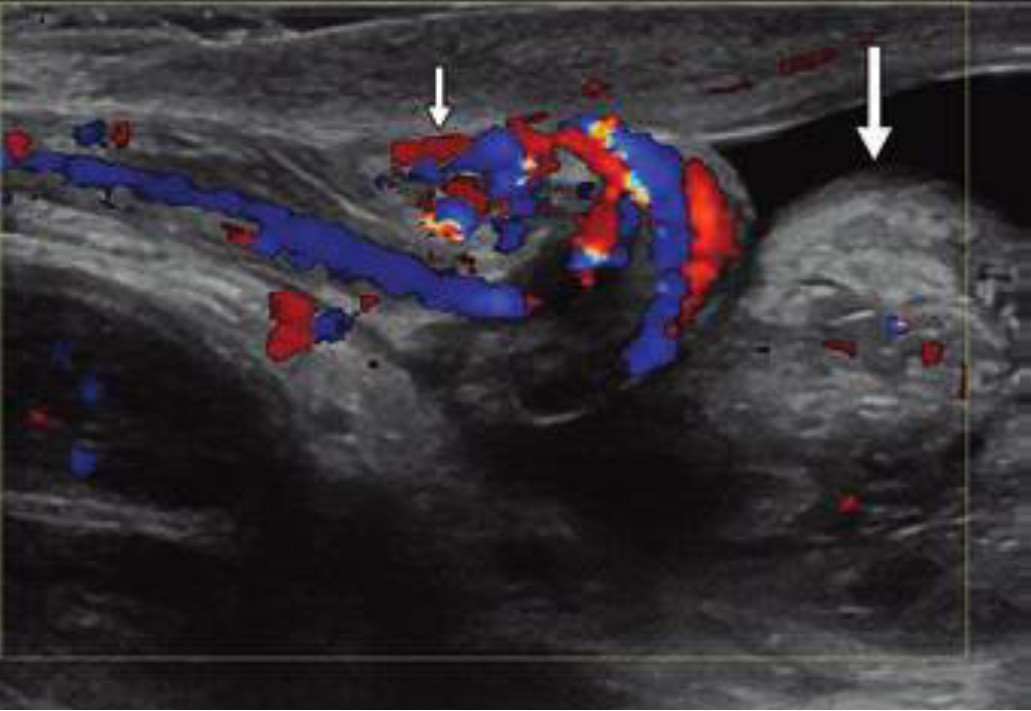
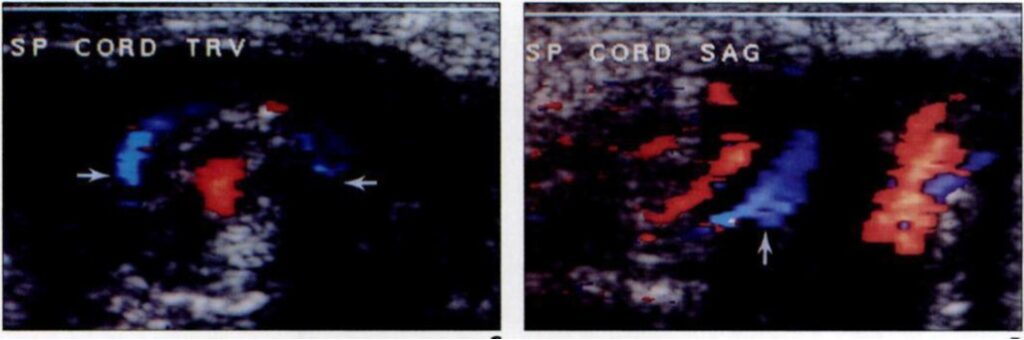
Pool Side: One of the most reliable indicators of torsion is the whirlpool sign, which represents the spiral twisting of the spermatic cord. Finding this sign above the testis (indicating at least a 360-degree twist) has been reported in the literature to have as much as 100% sensitivity and specificity for torsion.
- Complete—Typically presents with absent or significantly reduced blood flow in the affected testicle, compared to the contralateral side.
- Intermittent—Defined as sudden unilateral pain that resolves spontaneously, this one is notoriously difficult to diagnose because blood flow may appear normal, or even increased, during examination.
Beware the Mimics: A common pitfall in scrotal imaging is misdiagnosing intermittent torsion as epididymitis. Following spontaneous detorsion, the ischemic tissue may respond with vasodilation, leading to hyperemia that mimics the appearance of infection. Additionally, twisting of the cord can create a heterogeneous “pseudomass” below the twist, composed of the congested epididymis and vascular bundle. Without careful evaluation of the cord’s proximal spiral twist, this can easily be mistaken for an inflamed epididymis.
- Check the Cord: Always perform longitudinal and transverse imaging of the spermatic cord vasculature—not just the testis, itself.
- “Boggy” Cord? In cases of intermittent torsion where a whirlpool isn’t obvious, an abnormal or thickened cord is a significant finding that supports the diagnosis.
- Differentiate by Resistance: Whereas epididymitis shows high flow and a low resistive index, torsion often presents with high resistive flow or absent diastolic flow.
Bottom Line: Even if flow seems normal today, repeat episodes of scrotal pain can’t be dismissed. A careful search for the whirlpool sign or an extratesticular pseudomass can be the key to saving a testis from future infarction.
Leave a Reply