
Summary: Sans clear, permanent payment pathways, right now, health care providers cannot sustain long-term investments in AI—no matter how clinically compelling.
Soft Serve: You know the deal. Most health care reimbursement relies on fee-for-service models that reward volume over outcomes. But AI is built different. And as Dr. Melissa A. Davis pointed out during our online course AI in Radiology: Evidence, Workflow, and Ethical Practice, the vast majority of the House of Radiology’s AI tools lack standard billing codes, clear ROI pathways, or permanent reimbursement mechanisms.
Numbers Game:
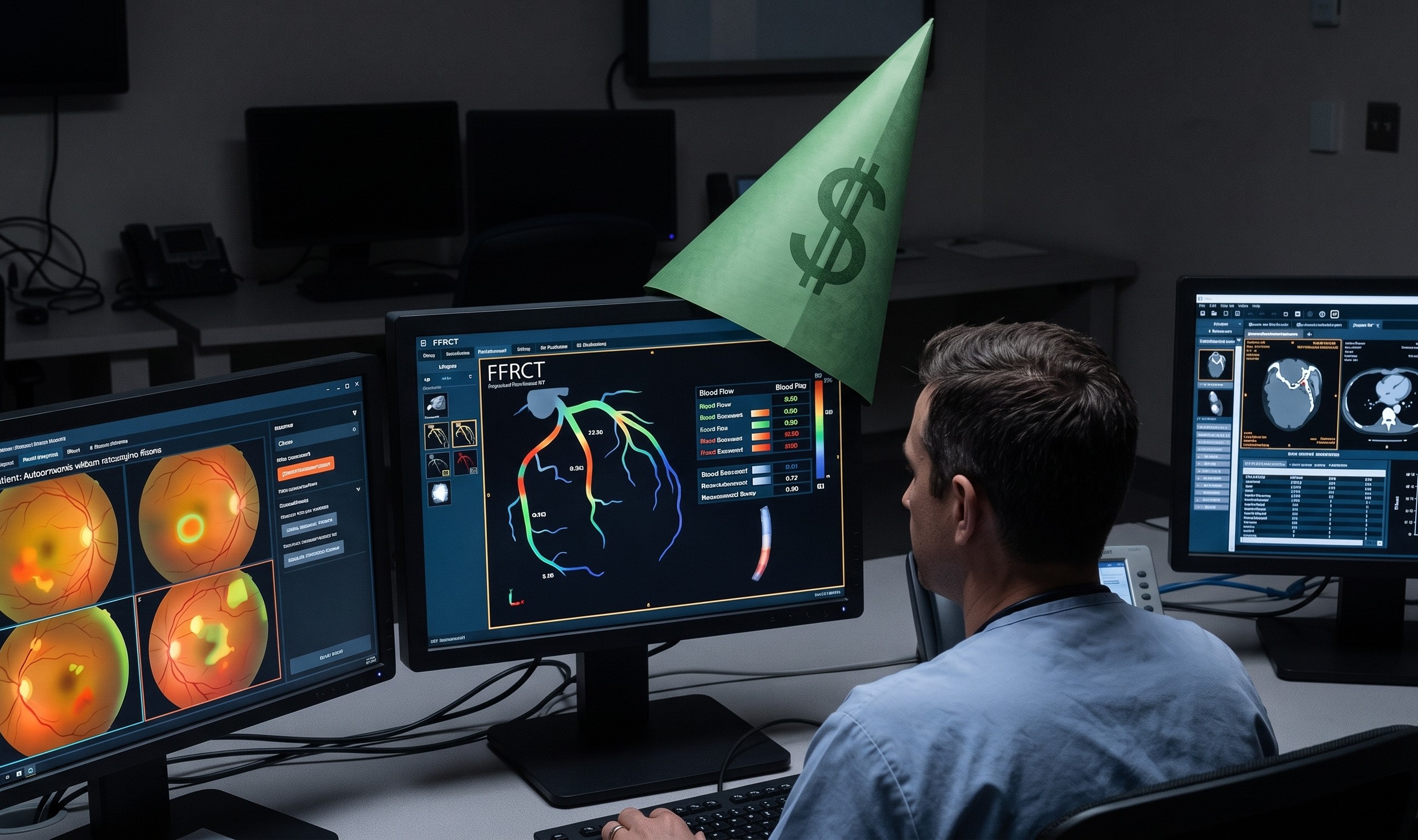
- 3: The number of AI applications that have successfully transitioned from temporary to permanent CPT Category I codes (diabetic retinopathy, FFRCT, and cardiac CT risk).
- Category III: The temporary code status where most radiology AI tools reside, offering no guaranteed payment rate and often timing out without becoming permanent.
- 2027: The proposed start year for CMS’s new software as a medical service (SaMS) payment pathway aimed at algorithmic diagnostic tools.
Subscription Friction: AI vendors frequently use subscription pricing models, but health system business offices struggle when temporary codes or NTAP payments get absorbed into low-yield inpatient DRGs.
- Commercial payers lag behind CMS payment policies, making Medicare’s evolving stance the primary catalyst for long-term financial viability.
Health Tech Investment Act: Pending legislation from the feds aims to extend temporary payment windows from three to five years, giving CMS more time to gather data and stabilize reimbursement.
Leave a Reply