
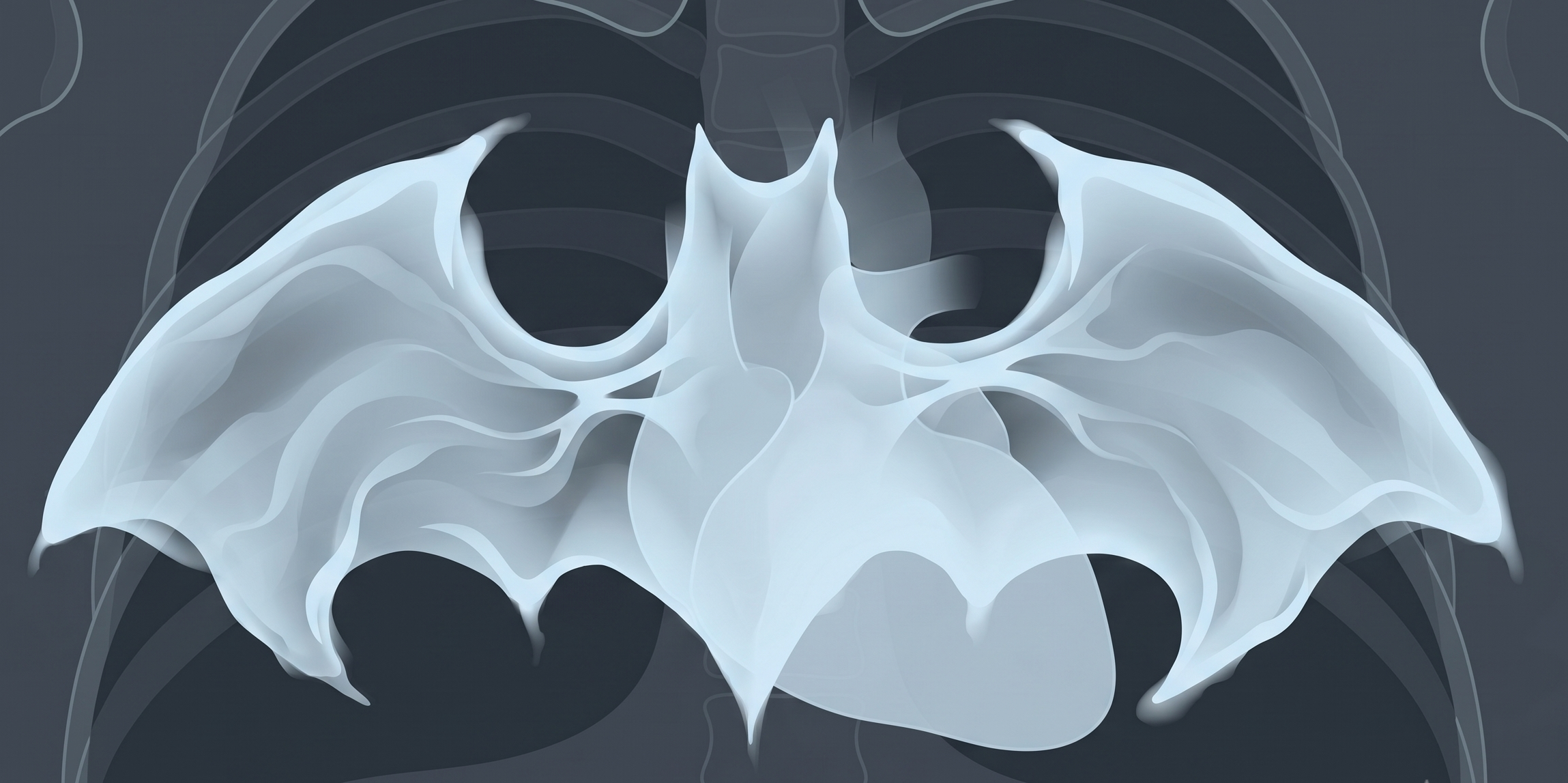
Recognizing the radiographic progression of congestive heart failure (CHF) is essential for identifying the severity of pulmonary edema and guiding clinical intervention. As Matthew D. Cham, MD, pointed out during the ARRS Online Course “Comprehensive Insights into Heart and Lung Transplant Imaging,” imaging findings correlate directly with increasing hydrostatic pressure—evolving from simple cardiac enlargement to life-threatening alveolar edema:
- Early Stage: Often, the only visible finding is cardiomegaly, while the lung fields remain clear and free of effusions.
- Interstitial Edema: As pressure rises, signs of interstitial fluid appear. Look for lung markings, as well as peribronchial cuffing and Kerley B lines.
- Alveolar Edema: This advanced stage presents as perihilar airspace disease and pleural effusions. On CT, this may manifest as diffuse ground-glass opacification.
RadFYI: In cases of severe alveolar edema, the fluid often settles in a typical perihilar distribution known as the batwing pattern. Moreover, chronic CHF can lead to additional systemic findings, including pericardial effusions, mediastinal lymphadenopathy, as well as ascites.
Leave a Reply