
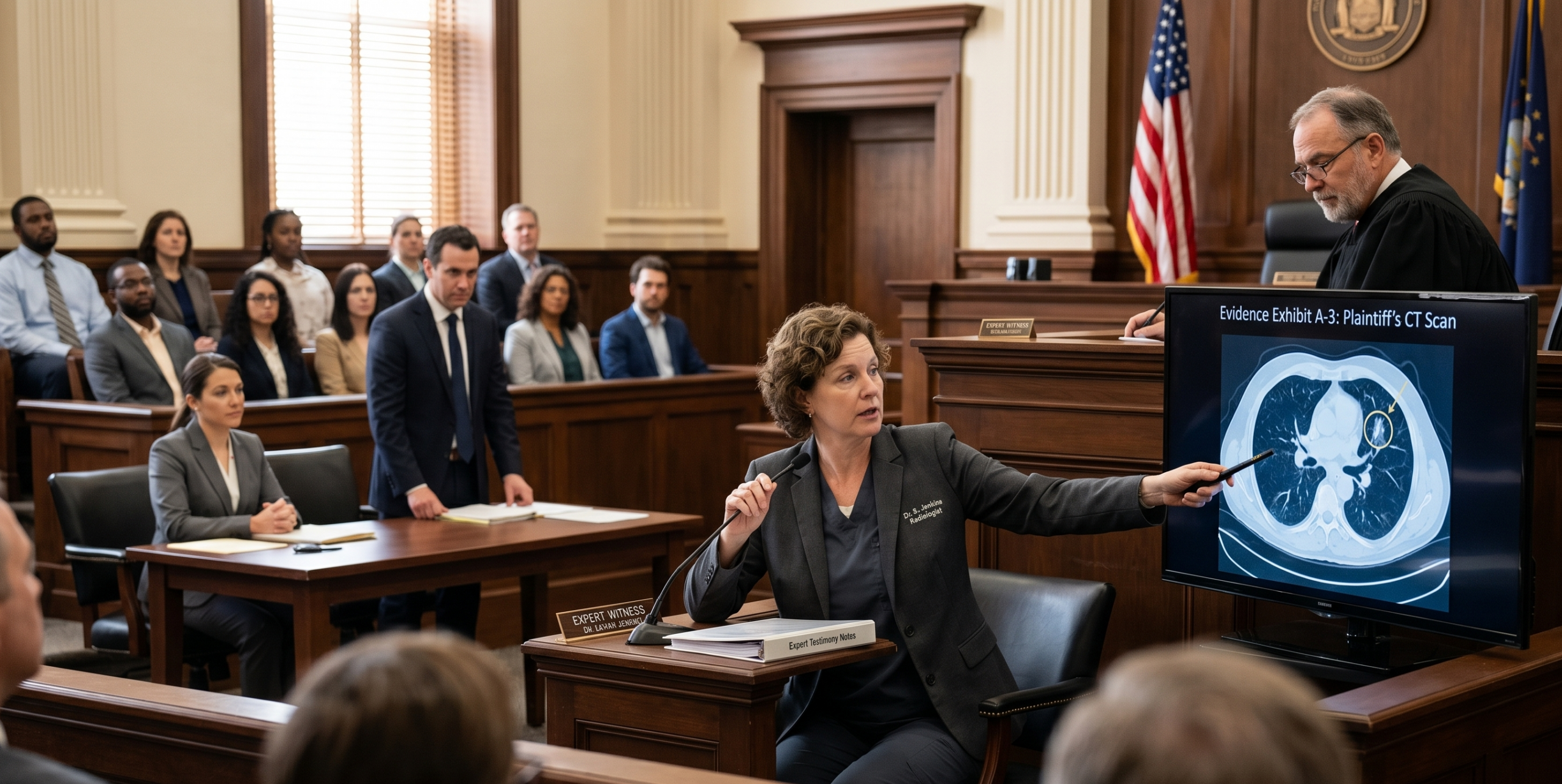
When done correctly, legal consulting offers rads a significant path to income expansion, all the while providing a frontline look at how to protect their practices from, well, malpractice. For starters, as Seth Kligerman, MD, said during Financial Wellness for Practicing Radiologists and Beyond at ARRS 2026, the gig pays “very well.”
Case Review: Assessing litigation not only helps avoid both the everyday pitfalls and those liabilities you didn’t even see coming, there are moral obligations here, too. Expert witnesses often address egregious medical mistakes and can defend colleagues when care more than meets the standard. Dr. Kligerman’s playbook for expansion also includes:
- Rep > Ads: While many rads do use third-party companies, relying on word-of-mouth builds a more sustainable, higher-quality offering.
- Both Sides: Indeed, expert witnesses must be willing to review both plaintiff and defense cases.
- Peer Learning: Success requires the ability to explain the complexities of modern imaging, medical physics, advanced anatomy, etc. not for peer review, but instead to a jury of peers.
- Claptrap: Alas, there are “morally ambiguous” witnesses who’ll say whatever they’re paid to.
Fact vs. Expert: As the late Leonard Berlin noted, legally, rads remain required to testify as fact witnesses for their own cases (frequently for a nominal fee), but the expert witness role is voluntary and involves negotiated rates. Most courts won’t compel rads to provide opinions against their will, unless they possess “unique” knowledge that no other witness can provide.
RadFYI: Expert witnessing is a lucrative way to leverage specialized knowledge, but it requires a high standard for what constitutes malpractice, as well as one’s own willingness to navigate ethical and legal entanglements alike.
Leave a Reply