
Summary: Pairing artifact-reduced imaging with consistent, rad-forward language helps hone reportage that can effectively guide surgical decision-making.
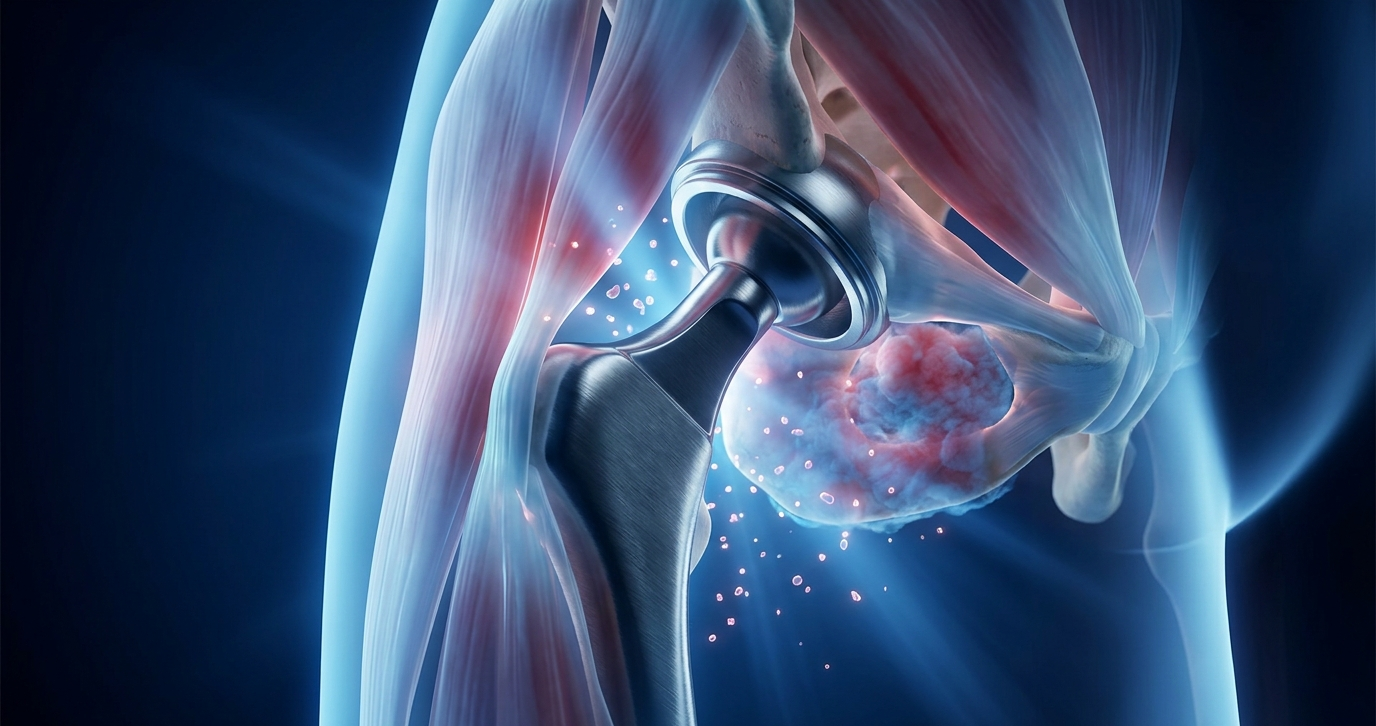
Particle Problem: All functional joint arthroplasties create wear particles that can trigger a host immune response, leading to inflammatory tissue damage around hardware. Because terminology describing these soft-tissue abnormalities is used inconsistently across literature and practice alike, as Dr. Jeremiah R. Long reminded us during ARRS26, clarity is critical:
- Quality Control: Implement metal artifact reduction techniques across both CT and MRI to better detect and characterize lesions.
- A Priori Advantage: Track lesion size and progression over time to assist surgeons in determining whether/when to revise.
- Clinical Context: Query the EMR for history, labs, operative details, etc.
- Imaging-Centric Language: Utilize “umbrella terms” appropriate for the specialty—pseudotumor and adverse local tissue reaction (ALTR), specifically.
Jettison the Jargon: Dr. Long suggested that we refrain from using gross, intraoperative, or pathological terminology, à la metallosis or trunnionosis.
Leave a Reply