
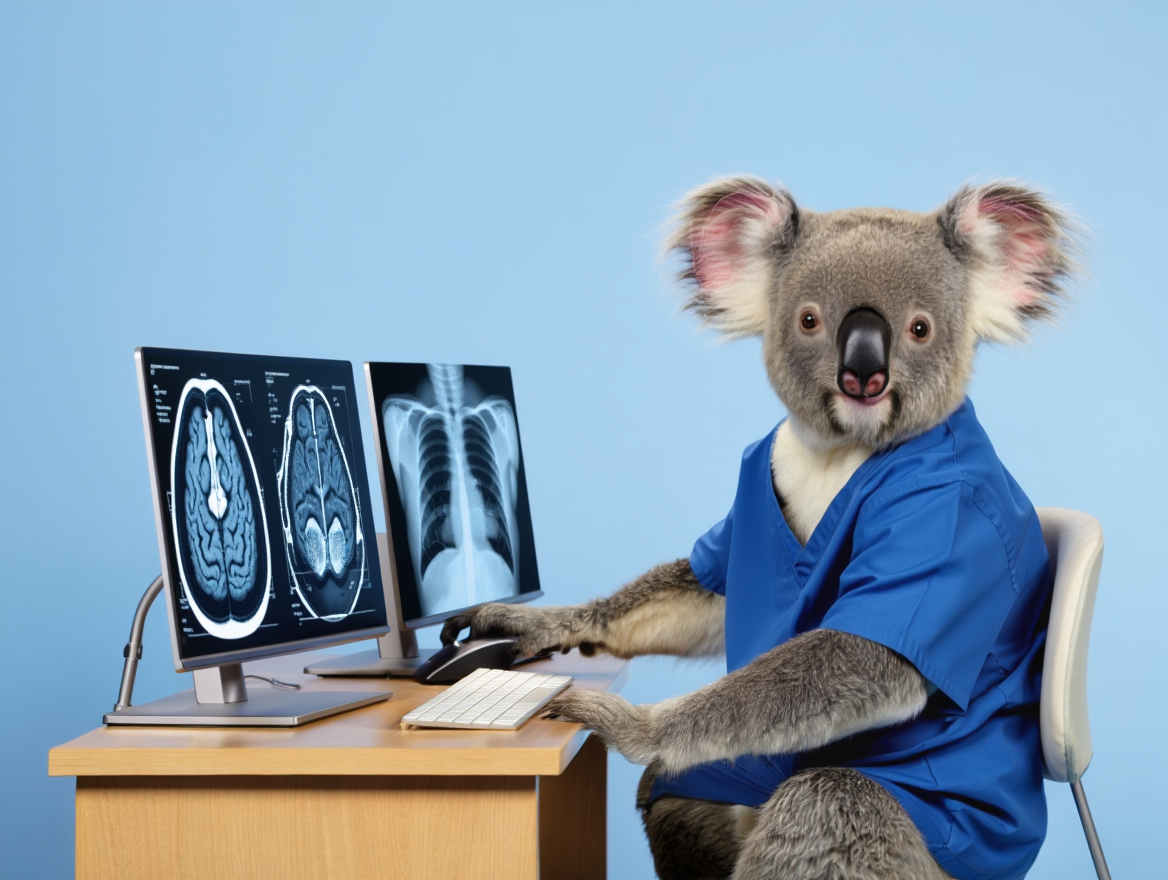
Why do we need a complex algorithm to tell us an image’s texture? In a recent R3 Author Interview, Hyun Ko, MD, lead author of an R3 article on radiomics, explained that our eyes can be misleading.
Her perfect example: a koala. Most people imagine a koala as a cute, fluffy animal. But its actual texture is rugged like a doormat.
Why it matters: This is precisely what radiomics is intended to address. It’s designed to identify when the look of a lesion doesn’t match its underlying texture.
- We see the forest, but radiomics can analyze the individual trees.
- Human eyes miss the detailed interpixel relationships that are beyond the limits of perception.
- This hidden texture could be the key to “characterizing lesions, predicting behavior, and detecting mutations” in ways simple size or attenuation metrics can’t.
The bottom line: The promise of radiomics is seeing what the human eye can’t. To make this promise a reality, strategic shifts are needed to produce meaningful evidence to show it’s ready for clinical adoption.
Leave a Reply