
Summary: Explicitly advise additional imaging to find the underlying cause, once the blood has cleared. If your initial CT reads negative, yet suspicion remains, repeat the study later or escalate to angiography…especially if it’s vasculitis you suspect.
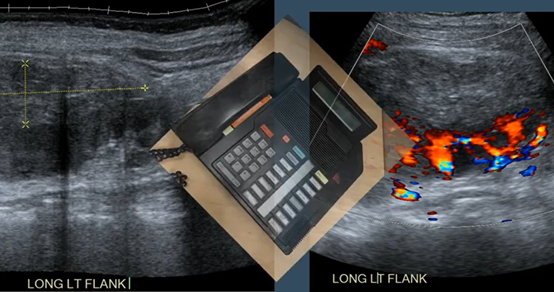
Clear Call: Quite quickly, Wunderlich syndrome—spontaneous, non-traumatic bleeding confined to the perinephric space—becomes life-threatening. When a patient presents with sudden flank pain, a palpable tender mass, or signs of hypovolemic shock, perinephric hematoma ID is merely your opening move.
- Root Cause: Staggeringly, 60% of these patients have an underlying renal mass, ranging from benign angiomyolipomas to renal cell carcinomas (RCC).
- Other Culprits: If there’s no mass, etiology may stem from vasculitis, arteriovenous malformations, anticoagulation complications, or cystic renal disease.
Ultimately, you can’t rely solely on that initial emergency scan to rule out pathology, Dr. Myra Feldman said during the ARRS Online Course with SRU Sound the Alarm! Emergency and Pitfall Cases in Ultrasound.
- Half-Sensitive: CT’s sensitivity at the time of an acute hemorrhage is only 57%.
- Masking Effect: Dense, acute blood products can easily obscure the underlying lesion.
So, what’s a rad to do? Don’t let this go undiagnosed. The reading room’s next best step: calling the ordering physician to report the hemorrhage.
Leave a Reply