
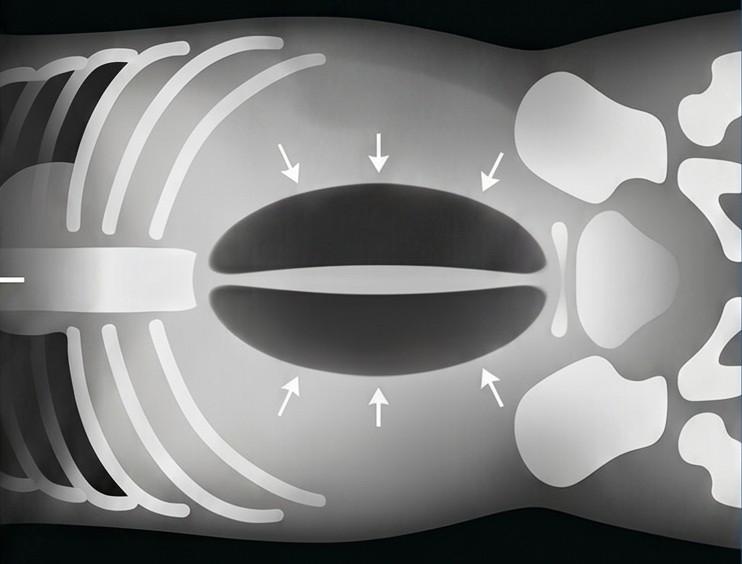
The “football sign” is a pathognomonic indicator of massive pneumoperitoneum on supine abdominal radiographs, characterized by a large, oval radiolucent area shaped like an American football.
SIP: In extremely low birth weight infants, this finding often signals spontaneous intestinal perforation (SIP), a condition distinct from necrotizing enterocolitis (NEC). Recognizing the difference is critical because SIP is often an isolated vascular insult, and as Susan D. John, MD, illustrated during Mastering Radiology: A Comprehensive Board Review for Residents and Refresher for Radiologists in Practice, some cases may heal without surgical intervention.
Three Tips from Dr. John:
- Radiolucent Oval—Massive free air collects anterior to the abdominal viscera, distending the peritoneal cavity and creating a sharp interface with the parietal peritoneum.
- Laces Out—The air outlines longitudinal structures of the anterior abdominal wall, most commonly the falciform ligament in the right upper abdomen. It may also outline the median umbilical ligament (urachal vestige) or medial umbilical ligaments (umbilical arteries).
- Bowel Appearance—A key clue for SIP is that the bowel often appears normal in caliber without evidence of pneumatosis intestinalis, which would typically be present in NEC.
Bottom Line: While frequently associated with spontaneous perforation in premature infants (ca. 24 weeks gestation), the football sign can also be seen in cases of iatrogenic trauma, such as rectal perforation resulting from the placement of a rectal tube. If the sign is suspected on a supine film, a decubitus view can be used to confirm the presence of free air.
Leave a Reply