
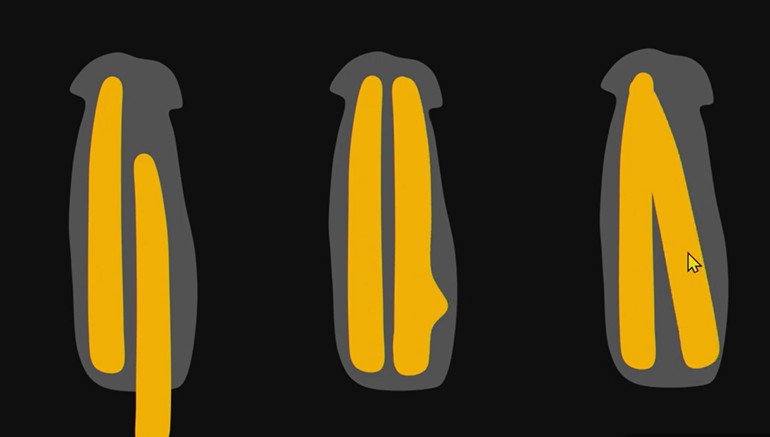
Summary: A standardized MRI protocol—evaluating the device in both inflated and deflated states—remains the gold standard for assessing integrity. To wit, Aswani’s own reporting template ensures a comprehensive evaluation of the glans, shaft, and proximal components, leading to more consistent patient outcomes.
Killer Crossover: As the prevalence of erectile dysfunction rises, so, too, do penile prostheses. For rads, accurately identifying normal device anatomy versus critical complications is essential for guiding patient care. As Yashant Aswani, MD, pointed out in the ARRS Online Course Imaging of Penile Implant, Gender-Affirming, and Cosmetic Surgeries, typically, complications are tripartite:
Cylinder
- Size Matters: Oversized implants can cause buckling; undersized cylinders may result in a floppy glans.
- Travel Plans: Cylinders can migrate laterally, proximally, or distally.
- The Crossover: AKA “medial migration,” this occurs when a cylinder perforates the septum. (You may see two cylinders in one compartment, although the other cavernosa appears empty.)
Reservoir/Pump
- Ectopic? It’s vital to distinguish true herniation or migration from deliberate ectopic placement by checking the patient’s surgical history.
- Cosmesis: Migration is often a cosmetic concern, but rads should still note its position.
Mechanical & Post-Op Risks
- Wear ‘n’ Tear: Look for signs of aneurysmal dilation or actual fractures of the implant.
- Infection: Commonly seen as soft-tissue abscesses or scrotal hematomas.
Leave a Reply