
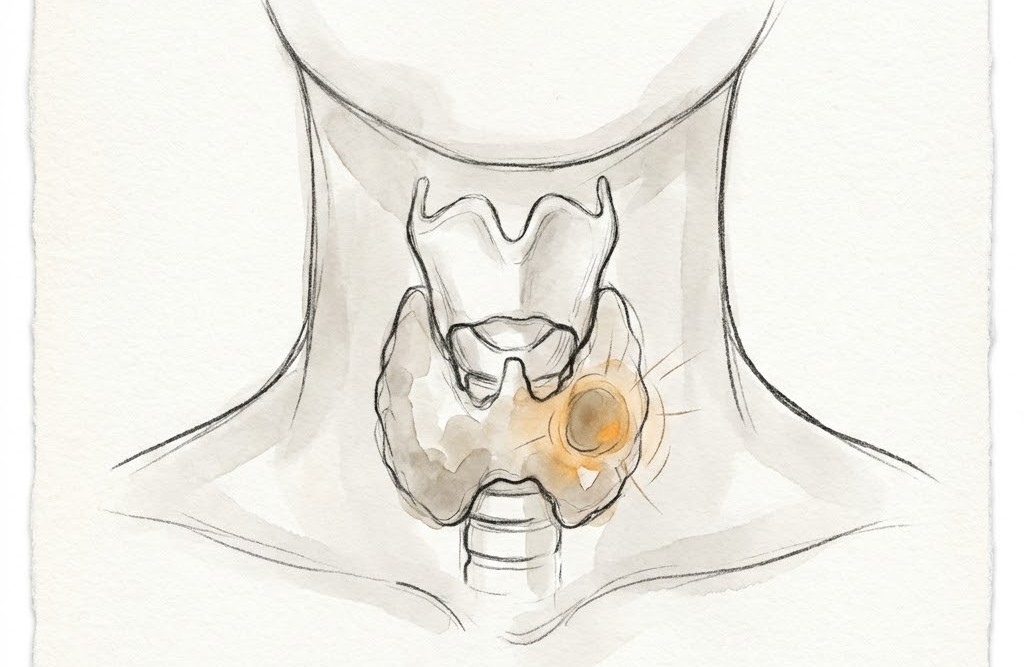
Summary: From benign solid nodules to active, AFTNs, thyroid RFA delivers excellent clinical outcomes, significant volume reductions, and functional recovery with minimal patient downtime.
RFA in the USA: Thyroid radiofrequency ablation offers an effective alternative to surgery or radioactive iodine—relieving cosmetic or compressive symptoms and normalizing function without the risk of lifelong hypothyroidism.
Approach & Technique: As Dr. Frank Hao explained during ARRS’ Emerging IR Treatments Online Course, operators utilize a trans-isthmic approach and the moving shot technique to systematically and safely ablate the tissue.
- Agents of Shield: To prevent complications, clinicians must identify and avoid what Hao dubbed the “danger triangle,” protecting critical structures like the recurrent laryngeal nerve, vagus nerve, and cervical sympathetic ganglion.
- Staged Ablations: For exceptionally large nodules, staging the treatment across multiple sessions keeps patients comfortable and prevents lidocaine from wearing off during a tedious procedure.
By the Numbers:
- 90%: Volume reduction rate achieved in a year for a very large mixed cystic nodule in Hao’s case, resulting in complete resolution upon physical exam.
- 40-91%: Rate of TSH normalization in patients treated for autonomously functioning thyroid nodules (AFTNs), allowing patients to completely stop thyroid-regulating medications like methimazole.
- <12 cc: Volume threshold below which hot nodules have a significantly higher chance of achieving a euthyroid state post-RFA.
Leave a Reply